U.S. citizens don’t need a passport for St. John. The U.S. Virgin Islands are U.S. territory, so a direct trip from the mainland or Puerto Rico is a domestic trip. You still need an ID that TSA accepts for the flight, such as a REAL ID license or a passport card. Before you fly home, U.S. Customs and Border Protection (CBP) checks your citizenship and what you’re bringing back. For any trip to the British Virgin Islands, everyone needs a passport book. Visitors from other countries need the same passport and ESTA or visa as for the mainland.
At a glance
- U.S. citizens
- No passport needed for direct trips between the mainland or Puerto Rico and the USVI
- U.S. Customs and Border Protection · verified
- ID for the flight
- REAL ID license, passport or passport card; $45 TSA ConfirmID without one
- Transportation Security Administration · verified
- Flying home
- CBP and agriculture check at STT before you board
- U.S. Customs and Border Protection · verified
- Duty-free
- $1,600 per person after 48 hours; 5 liters of alcohol if one is USVI-made
- U.S. Customs and Border Protection · verified
- BVI day trip
- Passport book, free online ED card, about $30 in BVI fees
- UK Foreign, Commonwealth & Development Office (GOV.UK) · verified
- Dogs
- Not allowed on any national park beach; leashed on trails
- U.S. National Park Service — Virgin Islands National Park · verified
U.S. citizens: passport or not?
No passport is needed for a direct trip. CBP says U.S. territories “are considered a part of the United States”, and citizens coming back directly from one “are not considered to have left the U.S.” The rule changes as soon as you visit a non-U.S. place, such as Tortola or Jost Van Dyke. Then you need a passport to come back.
Each step of the trip asks for something different.
| Step | What to show (U.S. citizens) |
|---|---|
| TSA, flight to St. Thomas | Adults 18 and older: REAL ID license, U.S. passport, passport card or another TSA-listed ID |
| Arrival at STT | Nothing. It’s a domestic arrival |
| CBP check before the home flight | No document required by law, but a passport, passport card, birth certificate or license speeds it up |
| TSA, flight home | The same ID as on the way out |
| Any trip to the BVI | A passport book for every traveler, children included |
Without a REAL ID. Licenses that aren’t REAL ID-compliant have not been accepted at airports since May 7, 2025. A REAL ID has a star in the top corner. If you have no accepted ID, you can pay $45 for TSA ConfirmID on Pay.gov before you go. It is non-refundable and covers 10 days from the travel date you enter, and TSA says it can’t guarantee it will verify you. TSA also accepts most IDs up to two years after they expire.
A birth certificate is not a TSA ID. It isn’t on TSA’s list, so it won’t get you through security on its own. It does help at the CBP check, and CBP recommends carrying one for children.
Children. TSA doesn’t require ID from travelers under 18 on domestic flights. Airlines may have their own rules for minors.
Tip
Pack a passport card or passport even if you fly on a REAL ID. It answers CBP’s citizenship question at STT in one step, and it lets you use the Mobile Passport Control lane.
International visitors: ESTA or visa
For immigration, the USVI is the United States. Visitors from other countries need the same documents as for New York or Miami: a valid passport plus an approved ESTA, if your country is in the Visa Waiver Program, or a U.S. visa. A flight between the mainland and the USVI doesn’t take you out of the country.
You are checked again before you fly from the USVI to the mainland. CBP’s rule is that “All non-US citizens need to have valid travel documentation to prove their legal presence in the US”. Keep your passport and your ESTA approval or visa in your carry-on.
| Traveler | Carry | Notes |
|---|---|---|
| Visa Waiver Program national | Passport and approved ESTA | Can use Mobile Passport Control at STT |
| Other nationalities | Passport and U.S. visa | B1/B2 visitors can use Mobile Passport Control |
| Canadian citizen | Passport | Can use Mobile Passport Control |
| U.S. green-card holder | Green card (and passport) | Can use Mobile Passport Control |
Apply for an ESTA only on CBP’s official site, esta.cbp.dhs.gov.
BVI side trips. Going to the BVI and back is a departure from the U.S. and a new entry, so your ESTA or visa must still be valid when you come back. Arriving from another Caribbean island on a regional airline, by ferry or on a private yacht can work differently. Confirm with CBP and the carrier before you book.
BVI day trips: passport, ED card and fees
The British Virgin Islands are a separate country, a British Overseas Territory a few miles across the channel from St. John’s North Shore. A day sail to Jost Van Dyke is easy, but the paperwork is the same as for any foreign trip.
- A passport book for everyone, children included. Ferry and charter operators ask for one. A U.S. passport card is valid for coming back into the U.S. by sea, but operators don’t accept it for BVI entry, and no BVI government page says it’s enough.
- The online ED card. Since January 1, 2025, every traveler fills in the BVI’s Embarkation/Disembarkation card online at bviedcard.gov.vg. You can do it up to 72 hours before travel, or on arrival before you reach immigration. You get an email with a barcode to show the officer. The card is free, so ignore any site that charges for it.
- Cash for the fees. The BVI charges an environmental and tourism levy of $10 on arrival and a ferry departure tax of $20 per person when you leave. These aren’t in the ferry fare. Small bills make the payment windows faster. On a private charter, ask whether the fees are included.
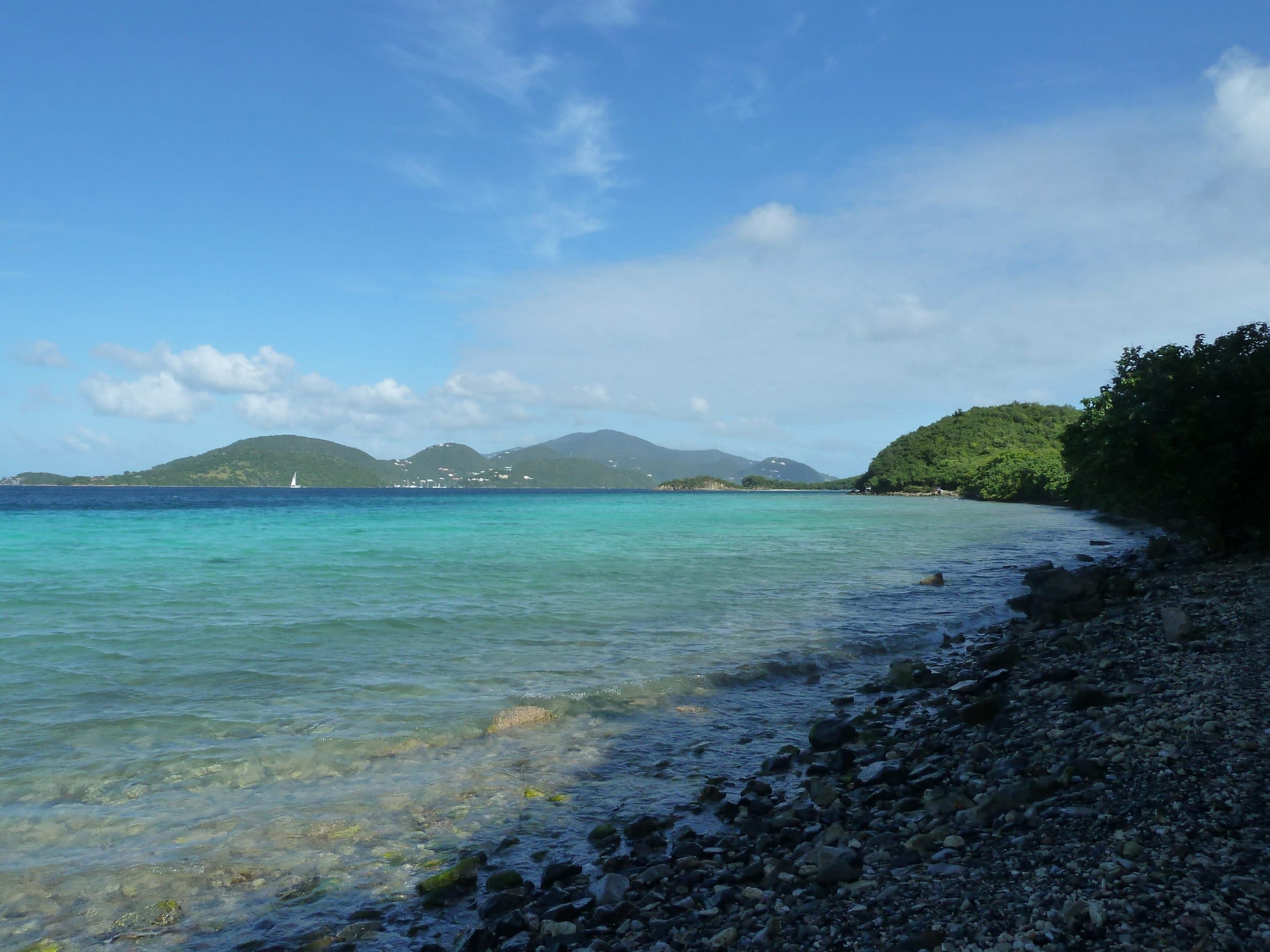
Coming back. You clear U.S. customs and immigration where the boat lands. Inter Island Boat Services’ BVI boats run between Red Hook, Cruz Bay and the BVI. Other operators land at Red Hook or Charlotte Amalie on St. Thomas, which means a ferry and a taxi back to St. John. Check the route before you book. Our ferry guide lists who runs where.
What counts for duty. The BVI is not a U.S. territory, so purchases made there fall under the $800 exemption for Caribbean Basin countries, not the $1,600 USVI exemption.
Flying home: the CBP check at STT
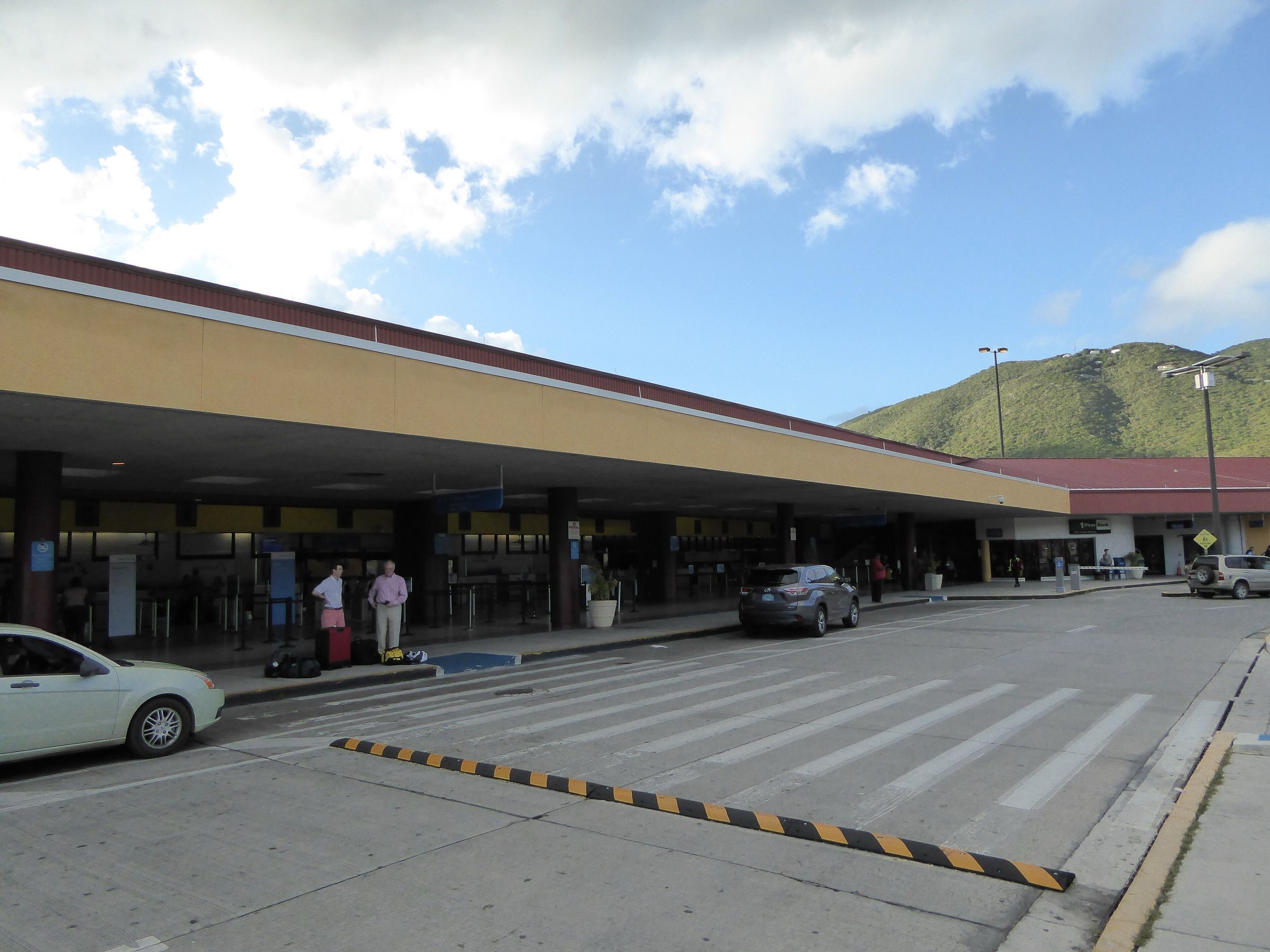
Flights from St. Thomas to the mainland are cleared before you leave. You won’t see customs again when you land in Miami or Atlanta. Allow extra time for the CBP step, which domestic airports don’t have.
- Airline check-in as usual.
- CBP and agriculture inspection. An officer asks where your trip started, which countries you visited, and the total value of what you’re bringing back. Officers can still hand you the paper declaration, Form 6059B. Inspectors may check bags for fruit, plants and soil. You must show all food, plants and agricultural items before you leave.
- TSA security with the same ID you used on the way out.
- Gate. You land on the mainland as a domestic passenger.
Mobile Passport Control. Since May 18, 2026, CBP’s free MPC app works at STT. U.S. citizens, green-card holders, Canadians, B1/B2 visitors and Visa Waiver travelers with an approved ESTA can use it. One submission covers up to 12 people, with a selfie for each. In the MPC lane you show your passport or green card, so travelers without one use the regular line.
Official notice — U.S. Customs and Border Protection
“Although U.S. citizens are not required to present a passport when departing U.S. territories and traveling to the mainland, having evidence of citizenship (e.g., U.S. passport, birth certificate, Trusted Traveler Program card) or lawful permanent residence (e.g., green card) available will help CBP expedite your customs processing.”
How early to arrive. No official STT guidance exists for this. Count on the extra CBP step, busy Saturdays, when many mainland flights leave, and the trip from St. John: a ferry, then 30 to 45 minutes by taxi from Red Hook. See getting to St. John for that leg.
Duty-free allowance and rum
Coming home from the USVI, each traveler gets a $1,600 duty-free exemption, twice the usual $800, if you’ve been in the territory for at least 48 hours. Above that, you pay a flat 1.5% on the next $1,000.
Alcohol fits into the same allowance with a few conditions:
- Up to 5 liters duty-free, if at least 4 liters were bought in the USVI and at least 1 liter is a product of the USVI. Look for “Product of the U.S. Virgin Islands” on the label.
- Age 21 or older, and only for personal use.
- Your home state’s limits still apply.
- Cruise-ship shops count less. Only 1 liter bought in a ship’s duty-free shop qualifies, or 2 if one is from an eligible Caribbean country.
- Extra bottles pay the 1.5% duty plus federal excise tax.
What 5 liters means in bottles. These are our own conversions of CBP’s 5-liter rule.
| Bottle size | Fits in 5 liters |
|---|---|
| 1 liter | 5 bottles |
| 750 ml | 6 bottles (4.5 L); a seventh takes you to 5.25 L |
| 1.75 liters | 2 bottles (3.5 L) plus one 1-liter bottle (4.5 L) |
A couple who are both 21 or older can bring 10 liters between them under the same conditions. Full-size bottles must go in checked bags because of TSA’s liquids rule. Wrap them well, and remember the $4 bag fee on the ferry back to St. Thomas.
Tip
Make one of your bottles a rum distilled in the USVI. That one liter is what unlocks the full 5-liter allowance. Keep the receipts for rum, jewelry and watches together in your carry-on, because the officer asks for the total value.
Food and plants
Coming in. Many visitors pack coffee, spices and dry goods in a checked bag. We found no USVI rule against everyday packaged food in your luggage. TSA’s liquids rule applies to your carry-on as usual.
Going home. The U.S. Department of Agriculture (USDA) bans most fresh fruit and vegetables from the USVI on flights to the mainland, unless they are on its allowed list. The list is long, and a fruit that isn’t on it can’t go. You must show all food and plants to the inspector at STT.
| Can’t fly home (common items) | Can fly home (a selection) |
|---|---|
| Mango, soursop and any fresh fruit not on the allowed list | Coconut, banana, plantain, papaya, pineapple, avocado, breadfruit |
| Sweet potato, fresh pigeon peas | Grapefruit, orange, lemon, lime |
| Fresh citrus leaves, cactus, plants in soil, soil itself | Genip, tamarind pods, jackfruit, mangosteen, watermelon, honeydew |
| Handicrafts made from palm fronds | Roasted or green coffee beans, in any amount |
| Sugarcane, live insects, land snails, pulpy seeds or nuts | Dried herbs, cut flowers, plant cuttings without soil, cleaned empty shells |
Commercially canned and thoroughly cooked foods are generally allowed, so local hot sauce, jam and rum are fine. Pack liquids in checked bags. For meat, dairy and other animal products, check USDA’s Veterinary Services Permitting Assistant before you pack them. CBP St. Thomas answers questions at 340-774-4554.
The souvenir trap. Woven palm-frond crafts are on the banned list. Ask what an item is made of before you buy it.
Fruit from the park. Inside Virgin Islands National Park you may gather coconuts, mangoes, limes, papayas, guavas and seagrapes by hand for your own use. A mango you pick on a trail still can’t fly home, so eat it on the beach.
Bringing a dog or cat
Dogs and cats can come to the USVI. A direct flight from the mainland or Puerto Rico counts as domestic travel, so there’s no import permit, but the Department of Agriculture has strict paperwork rules.
- Health certificate within 10 days of arrival, written by an accredited vet on the APHIS 7001 form, an official state certificate (CVI) or an approved electronic one. It must show the vet’s accreditation number and your pet’s rabies vaccination: date, product and lot number.
- Email it ahead. Send the certificate to [email protected] at least one business day before you arrive.
- Rabies. Your pet must be currently vaccinated, or have an adequate rabies titer test within the last 12 months. After a first vaccination, 10 days must pass before arrival. Animals too young to vaccinate can’t come. A pet that doesn’t meet the rules is quarantined for at least 10 days at your expense.
- The trip home. A health certificate is valid for 30 days at most, depending on your home state. On a longer stay, you may need a USVI vet to write one for the return.
Questions go to the Director of Veterinary Services at 340-642-7320, Monday to Friday, 8 AM to 5 PM. Pets arriving by cruise ship, private boat or from the BVI count as international imports and need the department’s approval first. Check with your airline about its pet policy before you book.
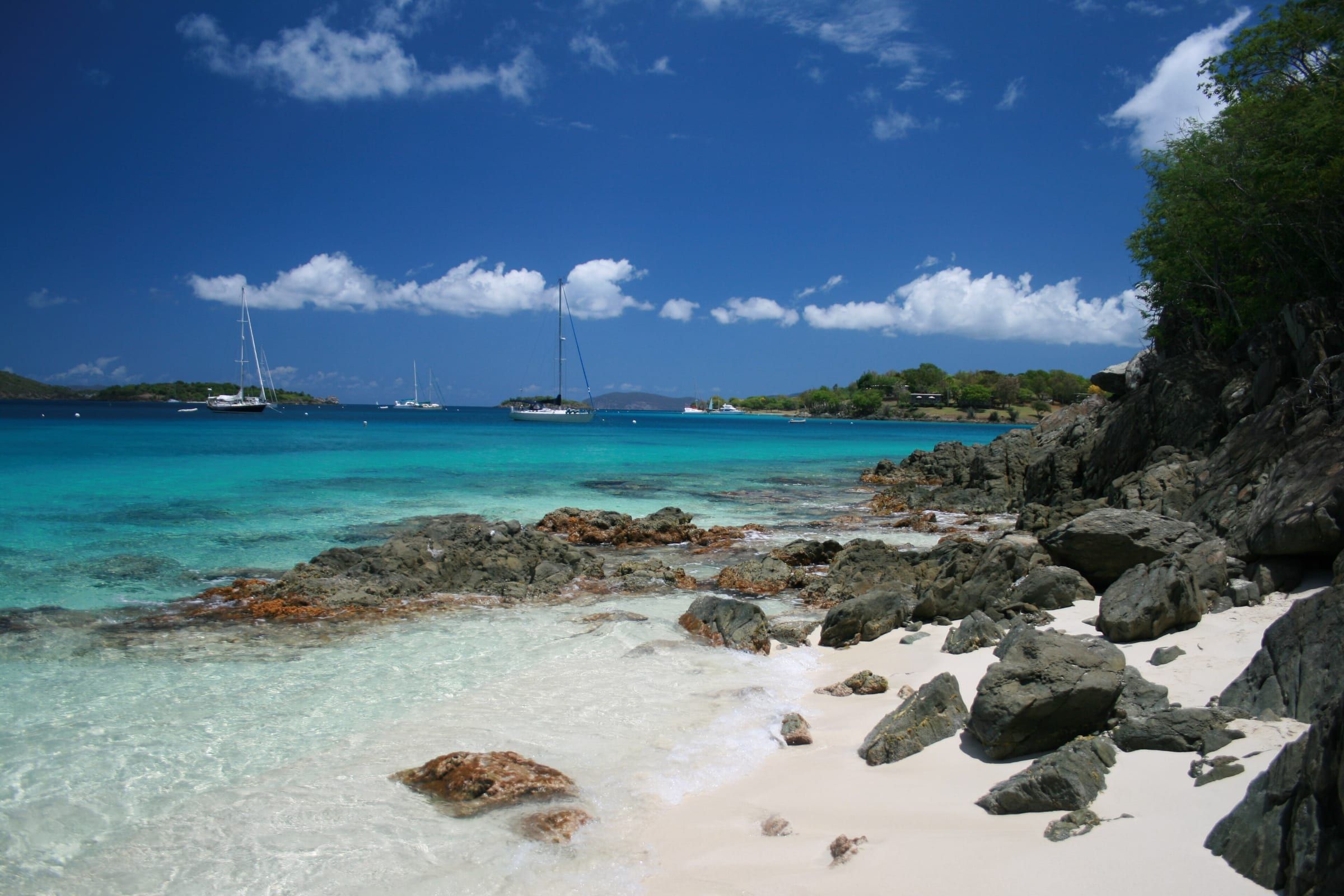
In the national park. The park covers most of St. John, and pets are not allowed on its beaches, to protect nesting sea turtles, shorebirds and visitors. That rules out Trunk, Cinnamon, Maho, Hawksnest and Honeymoon. “Beach” means 50 feet either side of the water’s edge. Leashed dogs are welcome on trails, on a leash no longer than 6 feet, and you must pick up after them. Service animals are welcome, leashed and under control.
Where to stay. Many villas and resorts don’t take pets. Book a place that confirms pets in writing first, then the flights. Ask the ferry operator about pets before you travel, too.
Documents checklist
Ticks are saved in this browser only.