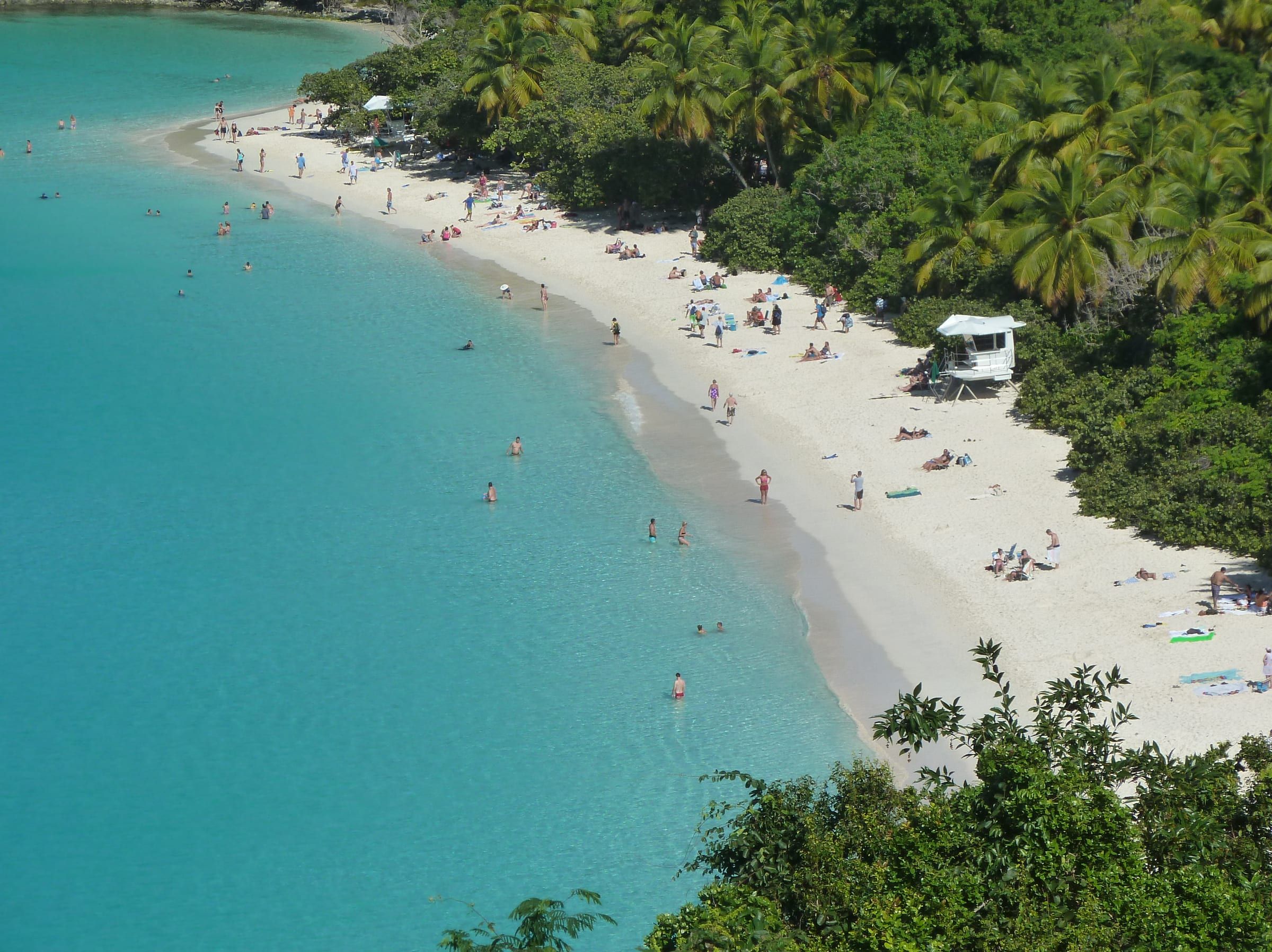
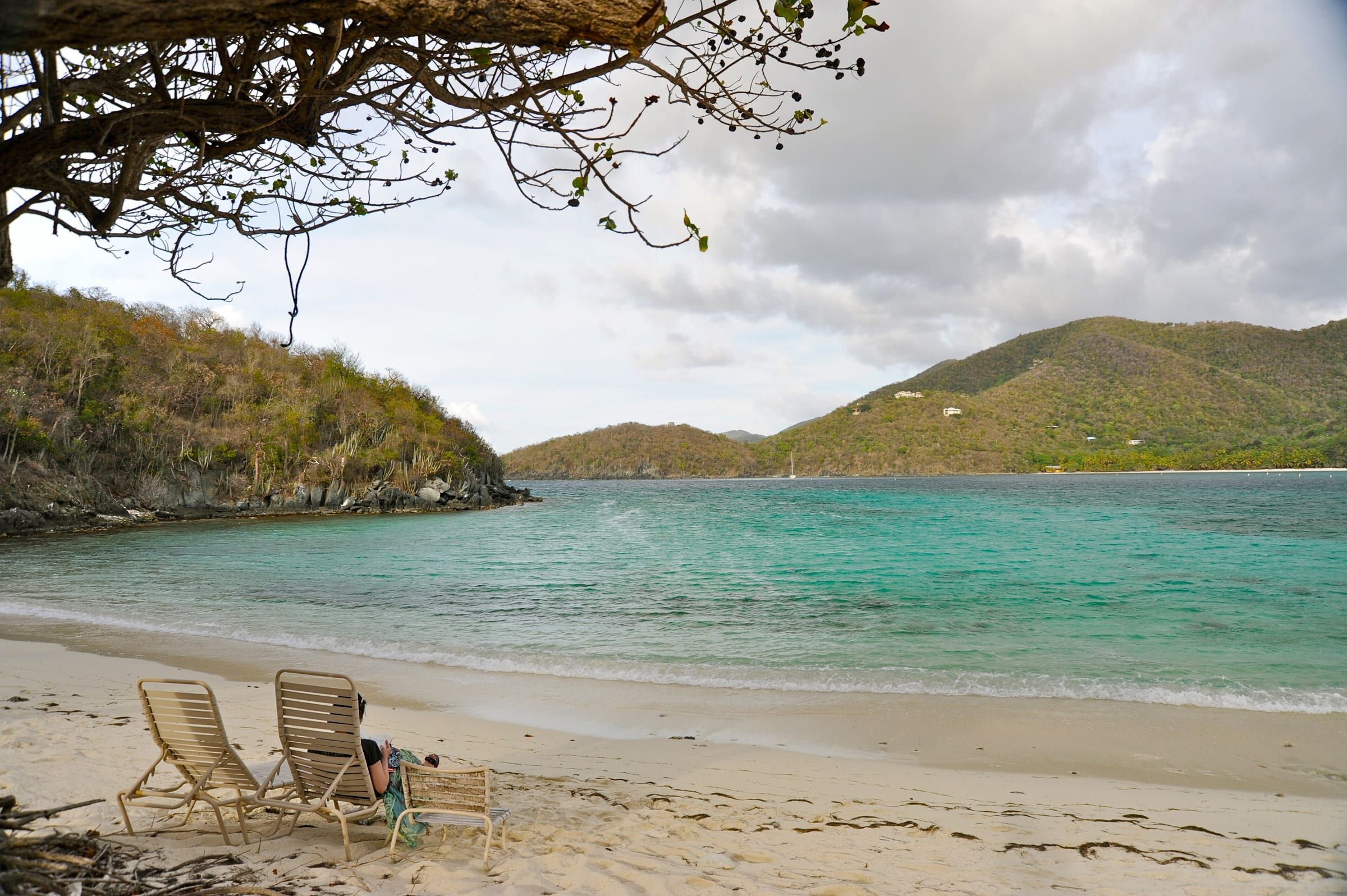
St. John is warm in every month: average highs run from 84 °F in January to 90 °F in August, and the sea stays near 80–85 °F. So the choice is about rain, crowds, prices and risk. Mid-December to mid-April is the dry, breezy high season, with the highest prices, long minimum stays and busy beaches. May to July is the best balance for many repeat visitors: calmer seas, lower rates and almost everything open, though sargassum seaweed has been heavy on east-facing bays in recent summers. Late August to October is cheapest and quietest, but it is the peak of hurricane season and many restaurants close.
At a glance
- Warm all year
- Average highs 84–90 °F; sea about 80–85 °F
- NOAA National Centers for Environmental Information · verified
- Hurricane season
- June 1 – November 30, peak around September 10
- NOAA National Hurricane Center · verified
- Wettest month
- November, 6.06 in on about 10 days
- NOAA National Centers for Environmental Information · verified
Live conditions are on /now/cruise-ships (cruise ships today).
Live conditions are on /now/tropical (tropical outlook).
Live conditions are on /now/sargassum (sargassum).
Month by month
The grid shows what changes through the year. Heat and rain come from 30 years of measurements at St. Thomas airport, about 8 miles west of Cruz Bay; no station on St. John has official normals. The other rows are our estimates from the sources named under the grid, and they’re marked “est.”.
| Jan | Feb | Mar | Apr | May | Jun | Jul | Aug | Sep | Oct | Nov | Dec | |
|---|---|---|---|---|---|---|---|---|---|---|---|---|
| Heat | Warm | Warm | Warm | Warmer | Hot | Hot | Hottest | Hottest | Hottest | Hot | Warmer | Warmer |
| Rain | Showers | Driest | Driest | Driest | Showers | Driest | Showers | Wet | Wettest | Wet | Wettest | Showers |
| Crowdsest. | Busiest | Busiest | Busiest | Busy | Moderate | Moderate | Busy | Moderate | Quiet | Quiet | Busy | Busiest |
| Pricesest. | High | Peak | High | Shoulder | Shoulder | Shoulder | Lowest | Lowest | Lowest | Shoulder | Shoulder | Peak |
| Hurricane riskest. | Off season | Off season | Off season | Off season | Off season | Low | Low | Elevated | Peak | Elevated | Low | Off season |
| Sargassumest. | Usually low | Usually low | Some | Some | Common | Peak | Peak | Common | Some | Some | Some | Usually low |
| North swellest. | Most likely | Common | Possible | Possible | Rare | Rare | Rare | Rare | Rare | Possible | Possible | Most likely |
| Bugs at duskest. | Moderate | Low | Low | Low | Moderate | Low | Moderate | High | High | Very high | Very high | High |
- Heat
- Average daytime high: under 85 °F, 85–87, 87–89, 89 °F and up (NOAA normals)
- Rain
- Average rain: under 2.5 in, 2.5–4, 4–5.5, 5.5 in and up (NOAA normals)
- Crowds
- The park is busiest November to April; holiday weeks from resort and villa rate seasons
- Prices
- One resort's 2026 rate seasons (summer, shoulder, winter, holiday peak); villas follow the same pattern
- Hurricane risk
- Atlantic season June 1 to November 30, peak around September 10 (NHC basin climatology, not a USVI forecast)
- Sargassum
- Seaweed on east-facing bays in 2025–2026: arrivals from spring, peak June–July; varies a lot by year
- North swell
- Winter cold fronts send large waves onto north-shore beaches (park service); summer is usually calm
- Bugs at dusk
- Inferred from rain days (under 5, 5–7, 7–9, 9 and up a month); no-see-ums and mosquitoes follow wet weather
Source: NOAA National Centers for Environmental Information, U.S. National Park Service, Gallows Point Resort, Villas of Distinction, NOAA National Hurricane Center, Virgin Islands Department of Planning and Natural Resources, Island Roots Charters · Rows marked est. are estimates; full sources at the end of the page
Data table
| Month | High °F | Low °F | Sea °F | Rain in |
|---|---|---|---|---|
| January | 84.1 | 73.6 | 80.1 | 2.64 |
| February | 84.3 | 73.5 | 79.5 | 1.9 |
| March | 84.5 | 73.8 | 79.5 | 1.86 |
| April | 85.7 | 75.5 | 80.4 | 2.24 |
| May | 87.2 | 77.5 | 81.7 | 3.02 |
| June | 88.9 | 79.3 | 82.9 | 2.35 |
| July | 89.7 | 79.3 | 83.3 | 2.91 |
| August | 89.8 | 79.6 | 84.2 | 4.37 |
| September | 89.2 | 79.5 | 84.7 | 5.89 |
| October | 88.4 | 78.3 | 84.7 | 5.28 |
| November | 86.6 | 76.6 | 83.5 | 6.06 |
| December | 85.2 | 74.9 | 81.7 | 2.93 |
Source: NOAA National Centers for Environmental Information, 1991–2020 normals · Cyril E. King Airport, St. Thomas (VQW00011640), about 8 miles west of Cruz Bay. Sea: seatemperature.info, ten-year monthly averages for the sea off St. Thomas from a commercial site; not an official series
The numbers hide how the rain falls. Even in November, the wettest month, it rains on about 10 days, and most of that comes as passing showers rather than all-day rain. For the forecast before you go, see current weather.
High season: mid-December to mid-April
This is the classic Caribbean trip: the driest months, steady trade winds and the coolest nights (around 73–76 °F). The park says it is busiest from November to April.
Prices and minimum stays. Lodging costs the most now and holiday weeks cost more still. At one Cruz Bay resort, Gallows Point, 2026 winter rates for two ran $795–$995 a night, against $395–$625 in summer. Its holiday peak covered Christmas to January 9 and Presidents’ Week (February 7–20 in 2026). Villas set long minimums over the holidays: one listing asks 5 nights in low season, 7 in high season and 10 over Christmas and New Year’s. Cinnamon Bay’s campground asks 7 nights over Christmas, New Year’s, Presidents’ Week and Easter, and takes bookings 11 months ahead.
North swells. Winter is the windiest time. Cold fronts off the mainland bring the “Christmas winds”, and the park warns they “can create large waves breaking on the north shore beaches”. On those days Trunk, Cinnamon and Maho can be rough. The south and east shores are usually calmer: Salt Pond, Little Lameshur and Hansen Bay make good backups.
Tip
Early December, before rates jump around December 18–20, often gets high-season weather at shoulder prices. Book holiday weeks, and the rental car, 9 to 12 months out.
Shoulder seasons
Mid-April to July. Winds ease and seas calm in late spring and summer, the park says, which suits snorkeling on the north shore. The water warms to about 81–83 °F, prices drop (Gallows Point’s shoulder rates ran $575–$745, with summer rates from July 11), and nearly every business is open. Highs reach 89–90 °F by July, so plan beach time for the morning and late afternoon.
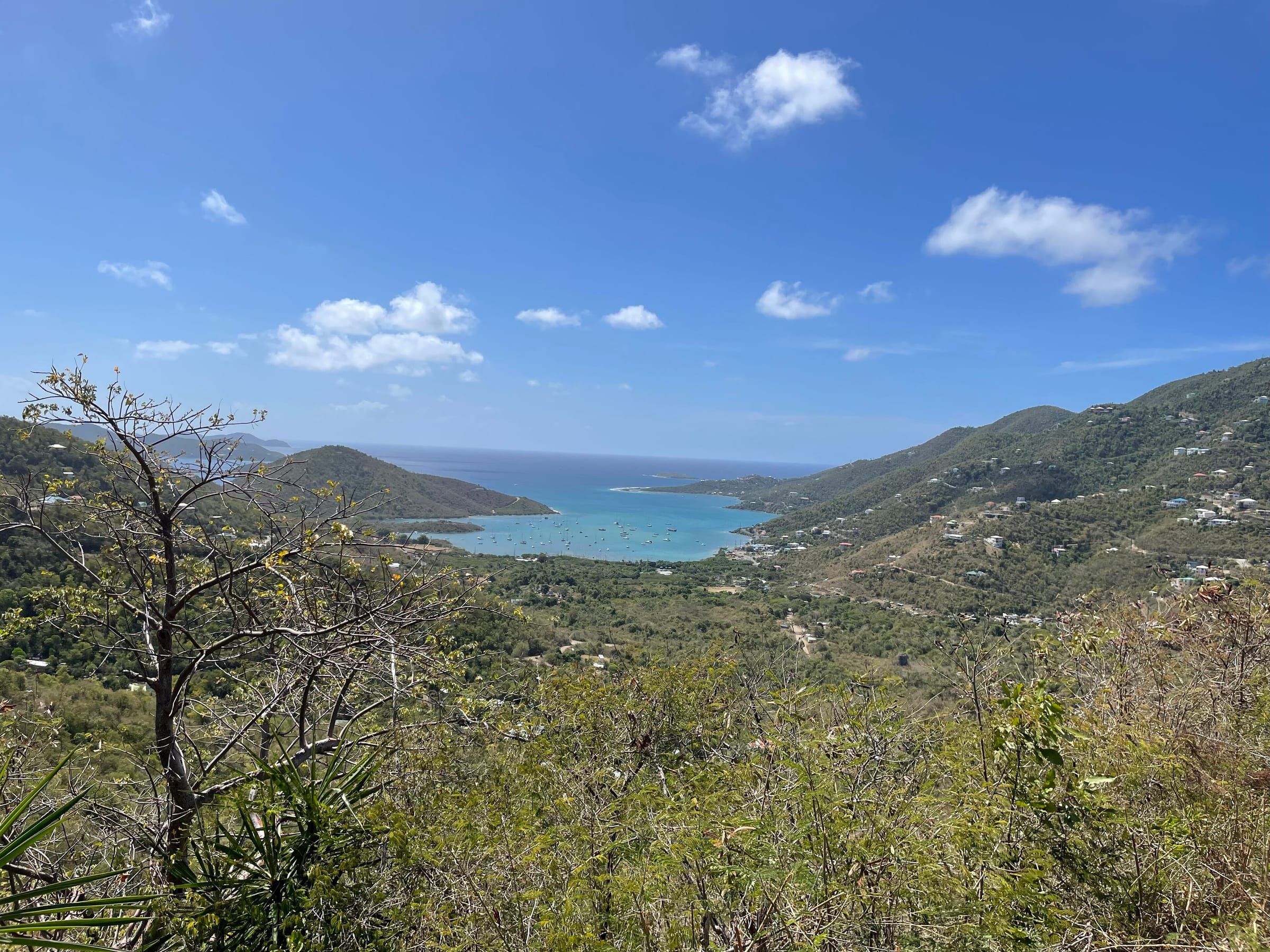
The catch in recent summers has been sargassum, a floating brown seaweed that piles onto east-facing shores. The territory’s Department of Planning and Natural Resources warned that 2026 would be another major sargassum year. On St. John the worst of it lands at Friis Bay, Haulover and around Coral Bay, while the north-shore beaches were largely clear in mid-June 2026. If seaweed is in the news before you go, plan north-shore beach days and check the sargassum page. Summer also brings Saharan dust, which turns the sky hazy.
Late June to July 4 is the St. John Celebration, the island’s carnival, with Village Nights in Cruz Bay and a parade and fireworks on July 4. See holidays and events.
November to mid-December. The second shoulder starts once most restaurants have reopened. November is the wettest month on average (6.06 in), but showers pass quickly and the hurricane season tapers to its November 30 end. Thanksgiving week is priced and booked like a holiday week.
Hurricane season
The Atlantic season runs June 1 to November 30. Activity peaks around September 10, with most storms between mid-August and mid-October. An average season brings 14 named storms, 7 hurricanes and 3 major hurricanes, spread across the whole Atlantic. These basin numbers don’t say how often a storm comes close to St. John, and we found no reliable figure for that.
Official notice — NOAA National Hurricane Center
“The peak of the Atlantic hurricane season is September 10, with most activity occurring between mid-August and mid-October.”
Is it worth going? It can be, if you accept the trade-off. In return for the lowest prices, the warmest sea and quiet beaches, you take a real chance of a disrupted trip, the wettest weeks of the year and many closed restaurants. For a visitor the realistic risk is cancelled flights, stopped ferries and days without power or water, more than injury. After a major storm, the territory tells St. John residents to plan for at least 10 days on their own, because ferries to St. Thomas may take time to restart.
The trip suits flexible repeat visitors with refundable bookings or travel insurance who don’t mind cooking. First-timers and anyone with fixed, expensive plans are better off in May to July or in high season.
- Book flexible. Choose refundable lodging and flights you can change, and read the insurance policy’s hurricane terms before you buy.
- Watch from a week out. Follow the National Hurricane Center’s outlook from about seven days before you fly. Official watches and warnings decide whether to go, not an app’s icon.
- If a storm threatens, ferries and flights stop early, so leave early or stay put with water, food and cash.
Live conditions are on /now/tropical (tropical outlook).
Fall closures
From late August into October, many restaurants, some bars and shops, a few tour operators and some lodging close for staff holidays and repairs. It is the quietest stretch of the year and the peak of hurricane season. Most places reopen during October, and by November nearly everything is open; a few wait until December.
The 2026 pattern, from a resident’s list updated October 28, 2026:
| Where | 2026 reopening |
|---|---|
| Cinnamon Bay campground, café and store | November 1 |
| Skinny Legs, Drink | Halloween |
| Little Olive, Ocean 362 | October |
| ZoZo’s, Lovango Resort + Beach Club | December |
| Charlotte Amalie ⇄ Cruz Bay ferry | November 1 |
The downtown St. Thomas ferry was suspended from August 30 to November 1, 2026. The Red Hook ferry and the car barges keep running all year; check the last boats for your dates in the ferries guide.
What stays open: the national park’s beaches and trails (unless a storm closes them), grocery stores, gas stations, the health clinic and most car rentals. Dates change every year, so check each restaurant’s own page or social account the week you travel.
Tip
In September and October, pick lodging with a good kitchen and plan on cooking most nights.
Crowds
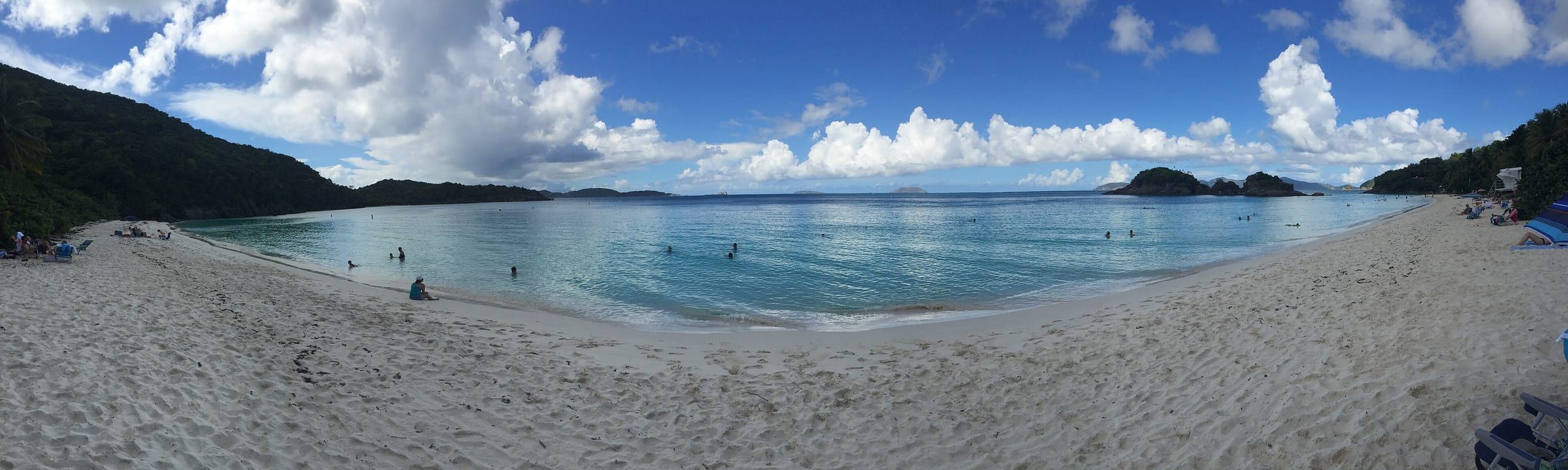
Most of St. John is national park, so quiet beaches exist even in peak weeks. The crowding sits at a handful of drive-up beaches on the north shore and in Cruz Bay.
Go early. Trunk, Maho and Hawksnest start filling up around 9:30 AM. Arrive before then, or head for Francis, Salt Pond or Hansen Bay. The popular beaches often empty again in the late afternoon, though no-see-ums come out near sunset.
Cruise days. Ships dock on St. Thomas, and some passengers take the Red Hook ferry or a tour to St. John, mostly to Trunk Bay. The main St. Thomas pier expects 359 ship calls and about 1.25 million passengers from October 2026 to September 2027. Small ships also anchor off Cruz Bay and bring passengers straight into town. Cruise passengers are told to be on the ferry back about two hours before the ship sails, so Trunk Bay and Cruz Bay are busiest from late morning to early afternoon. That is our estimate; nobody counts beach crowds. On a big ship day, see Trunk Bay early or late and spend midday on a hike-in or south-shore beach.
Live conditions are on /now/cruise-ships (cruise ships today).
Is St. John getting busier? By the numbers, yes. The territory counted 303,388 visitors in the first quarter of 2026, up 12% on 2025, and cruise passengers through June were up 40%. Those figures cover all three islands, mostly St. Thomas, and nobody counts St. John’s beaches. The extra visitors mostly show up at the same few beaches and in Cruz Bay.
Holidays and events
These weeks fill lodging, ferries, rental cars and restaurant tables, and prices go up.
| When (2026–27) | What it means |
|---|---|
| Thanksgiving week (Nov 26, 2026) | Priced and booked as a holiday week |
| Christmas to New Year’s | The busiest, most expensive weeks; 7–10 night minimums |
| Presidents’ Week (Presidents’ Day Feb 15, 2027) | Holiday rates and minimums at many villas and resorts |
| 8 Tuff Miles (Saturday, Feb 27, 2027) | Road race from Cruz Bay to Coral Bay; Centerline Road is busy that morning |
| Spring break (mostly March) | Busy, but we found no St. John dates or numbers |
| Easter (March 28, 2027) | Holiday minimums at many villas and at Cinnamon Bay |
| St. John Celebration (late June to July 4) | Cruz Bay’s carnival; ferries and lodging book up around July 4 |
The territory’s public holidays and the island’s festivals are on the events calendar.
Tip
Book Christmas, Presidents’ Week and Easter 9 to 12 months out. Reserve the rental car as soon as the lodging is settled; cars can sell out in holiday weeks.