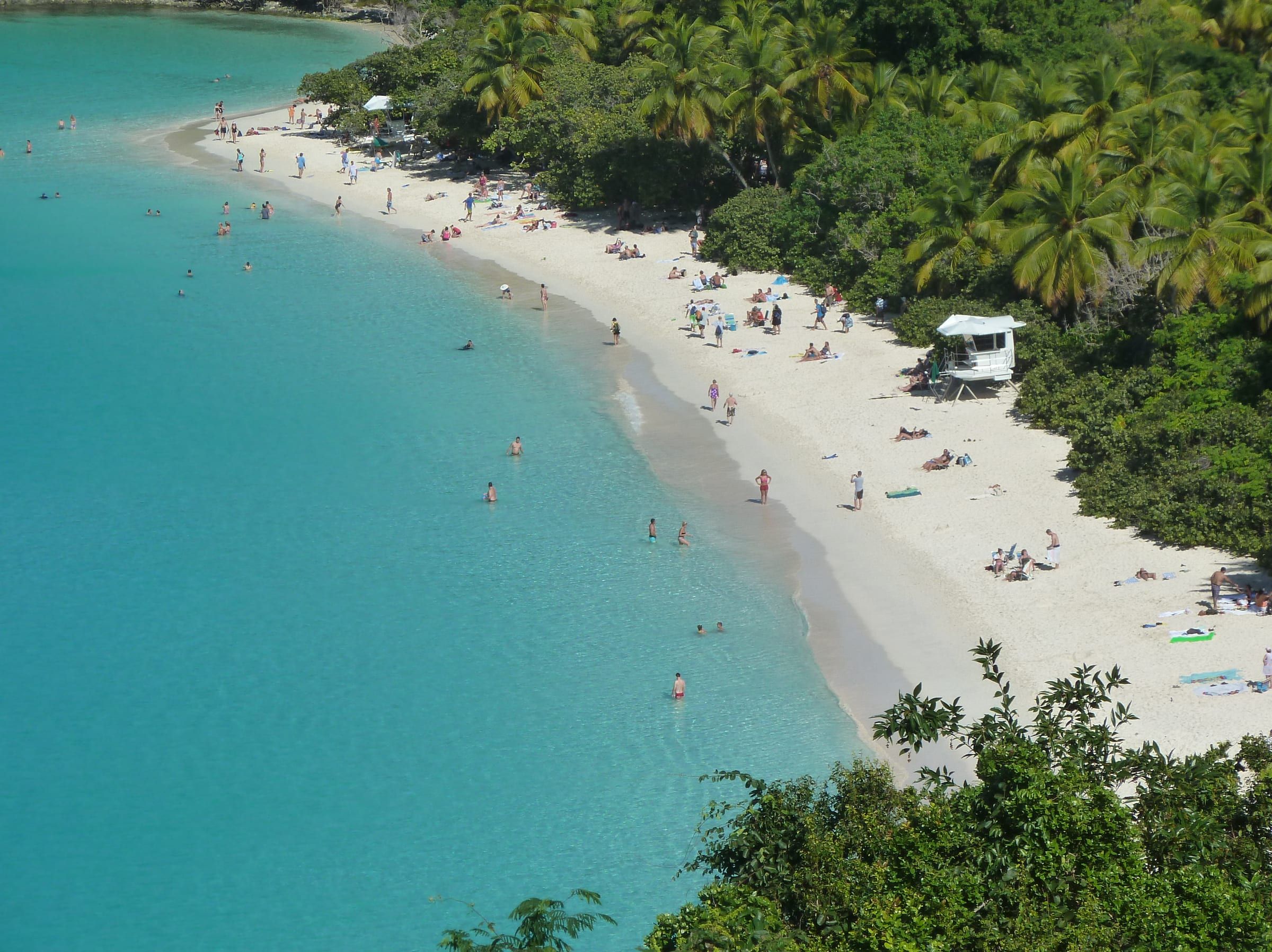
St. John is a safe place to visit by any ordinary travel standard. Violent crime against visitors is rare, and the crime you are most likely to meet is theft from a parked car or an unattended beach bag. The real risks are the ocean, the sun and the roads: most visitors who die in the park drown while snorkeling, and nobody is watching the beaches for you. Swim with a buddy, check the flag and the surf forecast, protect yourself from sun and mosquitoes, drive slowly on the left, and keep your valuables with you.
Official notice — National Park Service, Virgin Islands National Park
In an emergency dial 911. From a cell phone, park emergencies can also be reported at (340) 776-9110; to report someone acting suspiciously, call 1-866-995-8467. Official warnings from the park, the National Weather Service and VITEMA outrank anything on this site; current ones are on official alerts.
At a glance
- Emergency
- Dial 911; park emergencies from a cell phone (340) 776-9110
- National Park Service, Virgin Islands National Park · verified
- Crime on St. John
- No homicides in 2026 (territory-wide 45, as of Oct 31)
- The Virgin Islands Consortium · verified
- Most common crime
- Theft from parked cars; take valuables with you
- National Park Service, Virgin Islands National Park · verified
- Dengue
- 47 cases territory-wide in 2025, none on St. John since January 2025
- Virgin Islands Department of Health · verified
- Hospital
- None on St. John; serious cases go by boat to St. Thomas
- U.S. Virgin Islands Department of Tourism (VisitUSVI) · verified
Live conditions are on /now/alerts (official alerts).
Live conditions are on /now/sea (sea conditions).
Live conditions are on /now/weather (uv and sun times).
Crime
St. John has very little violent crime. The territory as a whole does have a serious gun-violence problem, but it is concentrated on St. Croix and St. Thomas. In 2026 the Virgin Islands had recorded 45 homicides by October 31: 27 on St. Croix, 18 on St. Thomas and none on St. John. In 2025 there were two on St. John, both in one shooting in June.
| Island | Homicides in 2026 (to Oct 31) |
|---|---|
| St. Croix | 27 |
| St. Thomas | 18 |
| St. John | 0 |
Both kinds of headline mislead: “highest murder rate” describes neighborhoods on the bigger islands that visitors rarely see, and “nothing ever happens here” is not true either. A local guide’s summary matches what we found: violent crime against visitors is rare, and the problems are theft, driving, sun and sea.
Use the same sense you would at home. Lock villa doors and sliders at night and when you go out, keep to lit streets in Cruz Bay late at night, and take a taxi rather than walking dark roads. We found no St. John-specific source on solo, women or LGBTQ+ travel, so we make no claim either way.
What actually hurts visitors, roughly in order: the ocean (below), heat and sun, the roads (left-side driving on steep, blind curves; see getting around), then theft. This order is our editorial reading of the sources on this page, not an official statistic.
Theft
Don’t leave valuables in the car or on the sand. The park service warns that valuables have been stolen from several vehicles in the park, adds that this could happen anywhere on the island, and asks you to take them with you or leave them in your room.
In the car. Most rentals are open Jeeps that are easy to get into. Leave nothing in sight, not even a bag or a towel over something. Some locals deliberately leave an empty open-top Jeep unlocked so that a thief has no reason to cut the soft top.
On the beach. Most beaches have nobody watching your things while you snorkel. Bring one card, a little cash and one key; keep them in a dry bag or a waterproof pouch, or take turns staying on the sand. Passports and spare cards stay in the villa safe.
| Take to the beach | Leave in the villa safe | Leave in the car |
|---|---|---|
| Phone, one card, key, cash | Passports, spare cards | Nothing you can see |
If something is stolen in the park, report it to the park line (1-866-995-8467) and to the police (911 in an emergency), so there is a record for insurance. Check before the trip whether your rental agreement or credit card covers a cut soft top or items taken from the car; we found no source on typical terms.
Ocean safety
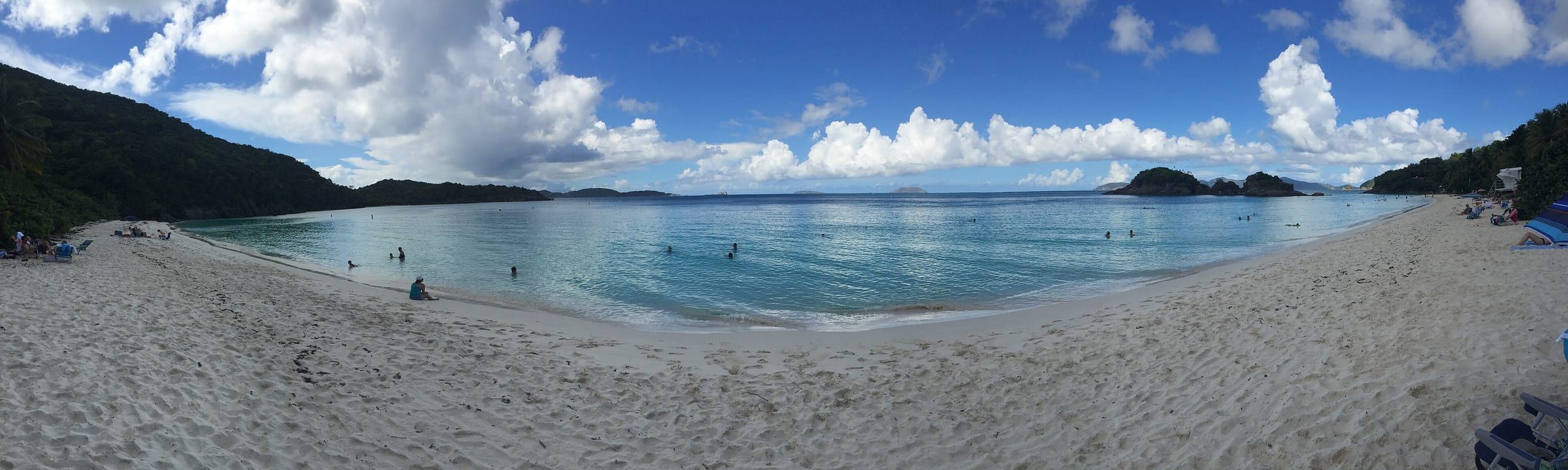
There are no lifeguards. The park lists “No lifeguards on duty” at Trunk Bay, the busiest beach, and Cinnamon Bay says “There are NO LIFEGUARDS at Cinnamon Bay”. Some guides still say Trunk Bay has them; plan as if no beach on St. John does.
Drowning is the main danger. An analysis of park-service data by a law firm ranked Virgin Islands National Park second among U.S. parks for deaths per visit, with 10 deaths per million visits and 33 deaths from 2013 to 2023, many of them snorkelers. It is not an official statistic, but the pattern is clear in the news: drownings were reported at Trunk Bay alone in 2018, 2021, 2022 and 2024, on calm-looking days.
Live conditions are on /now/sea (sea conditions).
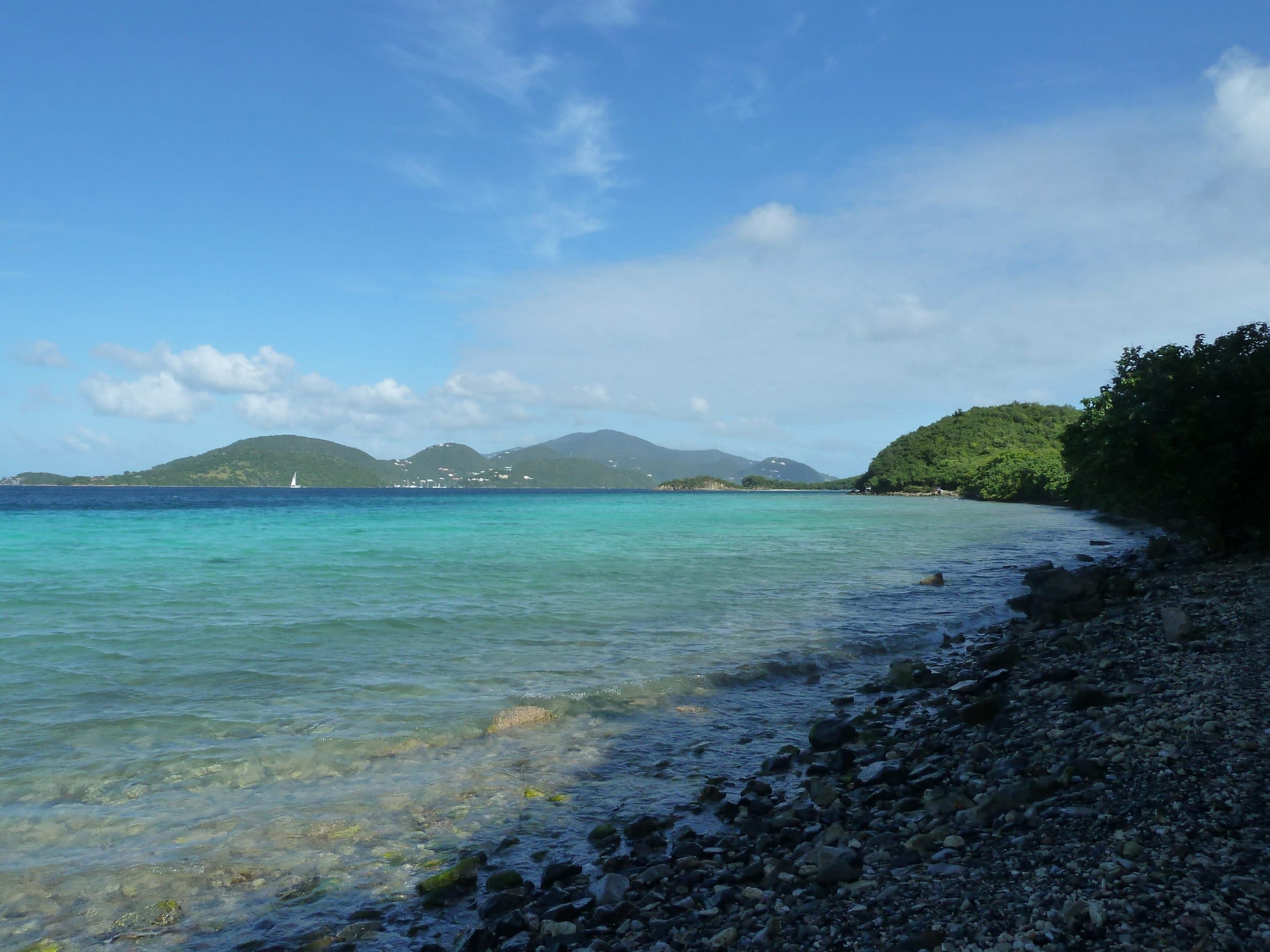
Before you get in:
- Check the flag at Trunk and Cinnamon. Red means extremely hazardous conditions with large powerful waves and strong rip currents; the water-sports rentals close. Yellow means moderate hazards with frequent large waves and possible rip currents; green means minimal hazards.
- Check the surf forecast. The National Weather Service’s Surf Zone Forecast gives a daily rip-current risk for St. Thomas and St. John; on November 20, 2026 it was low, with surf around 3 feet. Low is not zero: the forecast itself warns that rip currents often form near reefs, jetties and piers.
- Watch for north swell. From about November to April, cold fronts send big waves onto the north shore; the park warns they “can create large waves breaking on the north shore beaches”, even on a sunny, calm day. Head to the south or east shore then. See weather.
While snorkeling:
- Go with a buddy, and wear a snorkel vest if you are not a strong swimmer. If you have a heart condition, ask your doctor about snorkeling before the trip.
- Don’t snorkel tired after a long travel day, after drinking, or alone far from shore.
- To rest, stand only on sand, never on coral; the park asks you to look, but don’t touch.
- Stay out of boat channels and away from boats at anchor.
- Caught in a current: don’t fight it. Swim parallel to the beach until you are out of it, or float and wave for help.
Stings, spines and sea life
- Jellyfish: stinging jellyfish are common in summer. Get out of the water if you are stung.
- Sea lice (the stinging larvae of some jellyfish and anemones) cause an itchy rash under your swimsuit. Change out of wet swimwear soon after swimming.
- Sea urchins: their long, brittle spines will puncture skin and break off. Wear water shoes on rocky entries and watch where you put your hands and feet.
- Fire coral and sponges burn or sting on touch. Don’t touch anything.
- Sargassum: brown seaweed piles up on east-facing bays in some months; jellyfish in it can sting, and rotting mats smell. The government expected a major sargassum year in 2026. See sargassum and water quality.
- Sharks and barracuda: barracuda are a common sight for snorkelers. We found no data on shark incidents at St. John and make no claim either way.
Sun and heat
At 18° north the sun is strong all year, even when it is cloudy or breezy. The EPA’s UV forecast for Charlotte Amalie was 8 on November 18, 2026, near the lowest of the year; the EPA calls 8 and above “very high to extreme” and says to seek shade when your shadow is shorter than you are.
Live conditions are on /now/weather (uv and sun times).
- Wear a hat, sunglasses and a long-sleeve rash guard while snorkeling; your back burns first.
- Use mineral sunscreen: the territory bans sunscreens with oxybenzone, octinoxate and octocrylene (see the packing list).
- Hike early. Bring plenty of water, more than you think; the park’s advice is bring plenty of water when hiking.
- Summer brings heat advisories: on August 24, 2026 the Weather Service issued one for all three islands from 10 AM to 4 PM. Rest in the shade, drink often and stop if you feel dizzy or sick.
Dengue and Zika
Dengue is present in the U.S. Virgin Islands. The CDC puts the territory in its “frequent or continuous” dengue risk group, like most of the Caribbean, and there is no current travel notice for it. The best protection is not getting bitten: see no-see-ums and mosquitoes.
The 2024 outbreak. The Department of Health declared an outbreak in the St. Thomas–St. John district in August 2024. From January 2024 to June 2025 the territory had 263 confirmed cases, 40 of them on St. John, and one death, almost all caught locally. On St. John the cases peaked in the summer of 2024; none began after December 2024.
| St. John dengue cases, by onset | Cases |
|---|---|
| January to March 2024 | 1 |
| April to June 2024 | 12 |
| July to September 2024 | 26 |
| October to December 2024 | 1 |
| January to June 2025 | 0 |
Source: CDC, MMWR, October 15, 2026.
Since then. The territory recorded 47 confirmed dengue cases in 2025, mostly on St. Croix. On November 20, 2026 the Department of Health had published no dengue update after February 2025 and no notice that the outbreak was over. That means no recent outbreak report, not that the risk is gone. Check the Department of Health before you travel.
Dengue causes fever with headache and muscle and joint pain; most people recover, but it can turn severe. Symptoms usually start 5 to 7 days after the bite (3 to 10). If you get a fever during or after the trip, see a doctor and say where you have been.
Zika and pregnancy. The CDC lists the U.S. Virgin Islands as an area with current or past Zika transmission; there is no active Zika travel notice for the islands. For such areas the CDC advises:
Official notice — CDC
Pregnant travelers, and travelers with a pregnant partner: discuss travel plans, reasons for travel, ability to prevent mosquito bites, and potential risks with your healthcare provider. If you choose to travel, prevent mosquito bites during and after travel; if you are concerned about Zika, also prevent sexual transmission. Travelers planning a pregnancy should talk with their provider and consider delaying pregnancy using CDC’s timeframes. Everyone returning should prevent mosquito bites for 3 weeks.
We do not give a yes or no on travel in pregnancy: that is a decision for you and your clinician. The CDC says registered repellents are safe and effective, even for pregnant and breastfeeding women; choose lodging with screens and air conditioning.
Plants and animals on land
There are no bears, big cats or snakes to fear in the park. The plants are the bigger risk:
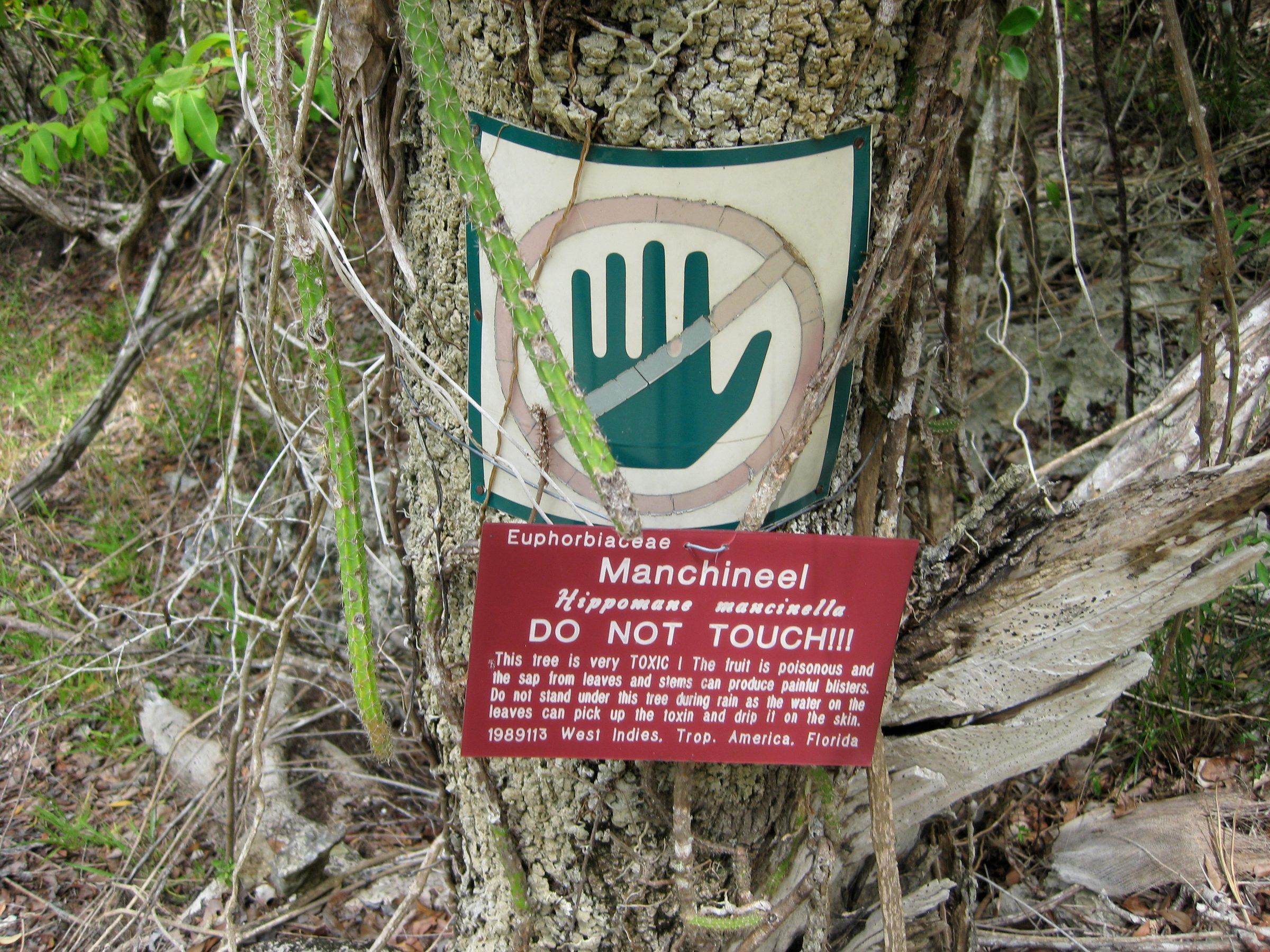
- Manchineel grows near the shore and on beaches. The park calls it extremely toxic in every part: eating the small green apple-like fruit can cause death, and the sap burns and blisters skin and can blind you for a while. Don’t touch it, don’t eat the fruit and don’t shelter under it in rain. If sap gets on you, wash with soap and water and get medical help for a bad reaction or anything in your eyes.
- Christmas bush, a small holly-like shrub common along trails, causes a burning, itching rash that can last up to several weeks. Stay on the trail and don’t brush against plants.
- Cacti grow low beside many trails and break off when you brush past them.
- Don’t eat unknown fruit or touch plants you don’t know.
- Ruins: don’t climb or sit on the walls; they are unstable.
- Scorpions and ants turn up in houses. A scorpion sting is painful but, according to one villa agency, “isn’t poisonous”; get help if you react to it.
Medical care
There is no hospital on St. John. The island’s main facility is the Myrah Keating Smith Community Health Center on Centerline Road, 340-693-8900. Patients who need more care go by medical boat to the hospital on St. Thomas, and medical evacuation is available. We could not confirm its current hours on the operator’s own site, so call before you go for anything that is not an emergency.
Myrah Keating Smith Community Health Center
MedicalMid-island
St. John’s community health center on Centerline Road in Susannaberg. No hospital on the island: serious cases go to St. Thomas.
Morris F. De Castro Clinic
MedicalCruz Bay
Department of Health public clinic in Cruz Bay, weekdays 8 a.m.–5 p.m. Not an emergency room: for emergencies dial 911.
Chelsea Drug Store
PharmacyCruz Bay
The only pharmacy found on St. John, in The Marketplace on Route 104 above Cruz Bay. Call ahead to check stock.
- Emergencies: dial 911.
- Public clinic: the Department of Health’s Morris F. de Castro Clinic in Cruz Bay is open Monday to Friday, 8 a.m. to 5 p.m.; it is not an emergency room.
- Pharmacy: Chelsea Drug Store in The Marketplace is the one pharmacy we found. Bring a full supply of your medicines and a copy of each prescription.
- Insurance: check before you go whether your health plan or travel insurance covers care in the territory and a medical evacuation.
Tip
Save 911 and the park line (340) 776-9110 in your phone before you hike, and tell someone where you are going and when you expect to be back.