At a glance
- Best shore snorkel
- Waterlemon Cay in Leinster Bay, for confident swimmers
- U.S. National Park Service · verified
- Easiest
- Francis Bay, Maho Bay and the Trunk Bay underwater trail
- U.S. National Park Service · verified
- Turtles
- Maho Bay seagrass, most often early morning or late afternoon
- U.S. National Park Service · verified
Live conditions are on /now/sea (sea conditions).
Short answer
For confident swimmers, Waterlemon Cay in Leinster Bay, reached on a flat walk from the Annaberg lot, is the best shore snorkel on St. John. Francis Bay, Maho Bay and the marked Trunk Bay underwater trail are the easy picks, and Maho is the place for green sea turtles. On the South Shore, Salt Pond Bay adds southern stingrays. The sea decides the day: when a north swell clouds the North Shore, usually in winter, snorkel the south and east sides instead. Expect coral in mixed condition and come for the fish, turtles and seagrass life.
Best snorkeling spots
The park puts it plainly: “Over 40% of Virgin Islands National Park is underwater”, and every beach on the North Shore has something to see. These are the spots worth planning a morning around. The rating is ours, from the park’s descriptions and local guides, not an official score.
| Spot | Shore | Getting in | Rating | Best for | Watch out for |
|---|---|---|---|---|---|
| Waterlemon Cay | North | Flat 20-minute walk, rocky entry | 5 | Coral heads, gorgonians, turtles, rays | Strong current on the cay’s north side; urchins |
| Trunk Bay trail | North | Sand, from the beach | 4 | First-timers; underwater plaques | Crowds; rougher past the tip of the cay; $5 fee |
| Maho Bay | North | Sand, roadside | 4 | Green turtles over the seagrass | North swell clouds the water; busy in season |
| Francis Bay | North | Sand, short dirt road | 4 | Calm water, juvenile fish, turtles | Boats and current at Mary Point |
| Salt Pond Bay | South | Quarter-mile rocky trail | 4 | Turtles and southern stingrays | Dinghies in the mooring field |
| Yawzi Point, Lameshur | South | Rough road (4WD), short trail | 4 | Fish along the rocky point | Rocky entries; surf in a south wind |
| North Haulover | East End | Short path, pebble beach | 4 | Coral close to shore | Waves in a north or east wind; sargassum in summer |
| Cinnamon Cay | North | Sand, short swim to the cay | 3 | Fish around the cay; sandy rest spots | Boats heading to the cay |
| Honeymoon and Salomon | North | Trail from Cruz Bay or the Caneel lot | 3 | Coral on the point between the beaches | Charter-boat traffic |
| Hawksnest | North | Sand, roadside | 3 | Elkhorn coral “fingers” | Snorkel around the reef, never over it |
| Grootpan Bay | South | Poor dirt road past Salt Pond | 4 | Solitude, sea fans, conch (2018 local guide) | Urchins; description is older |
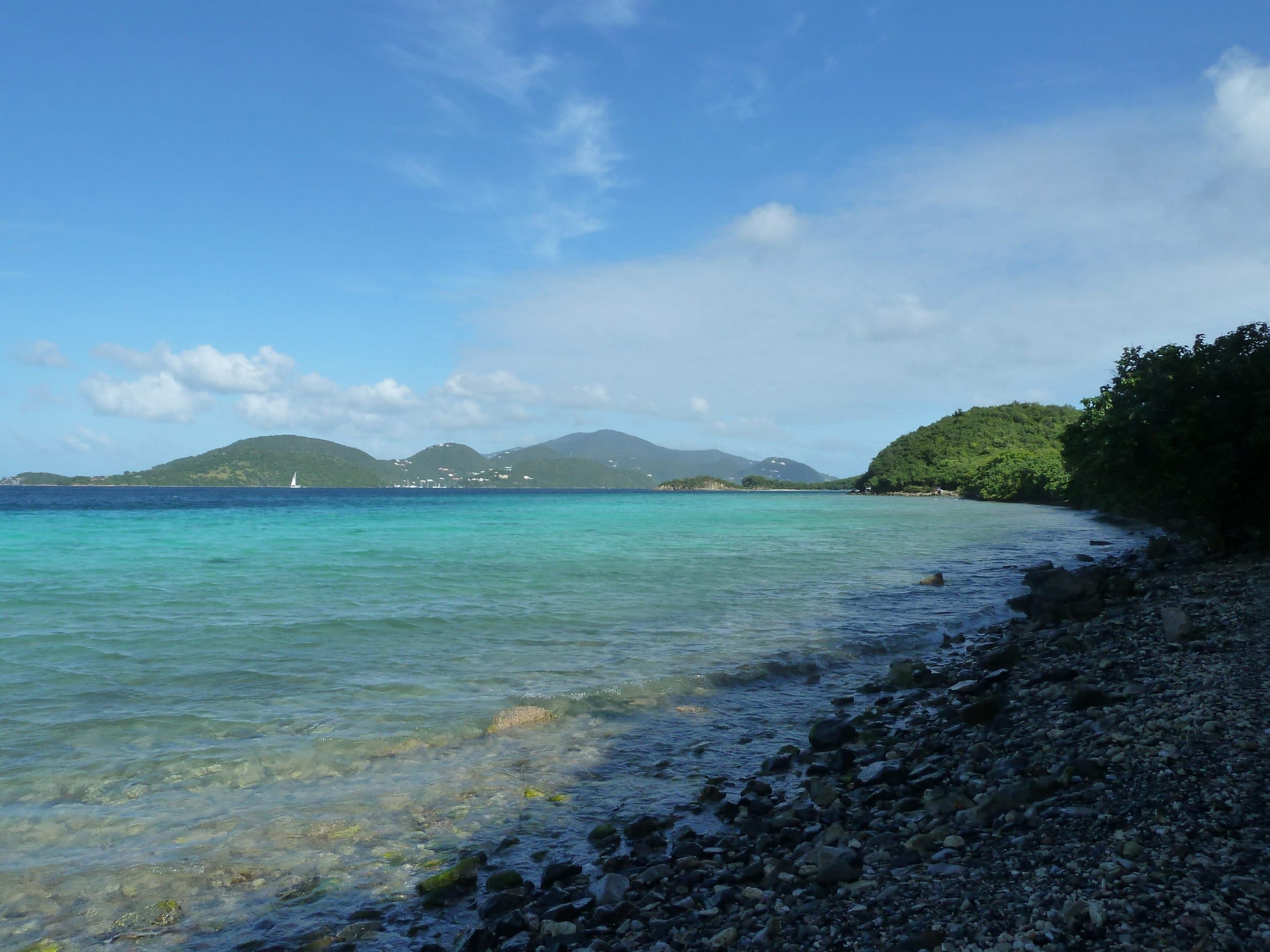
Waterlemon Cay. Park at Annaberg and follow the shoreline trail. The park describes a shallow reef of coral heads at the first entry point, about ten minutes along, then “a variety of fish, corals and gorgonians and more encircling the cay”. It is the best snorkel on the island, and the hardest of the easy ones: see how hard is Waterlemon.
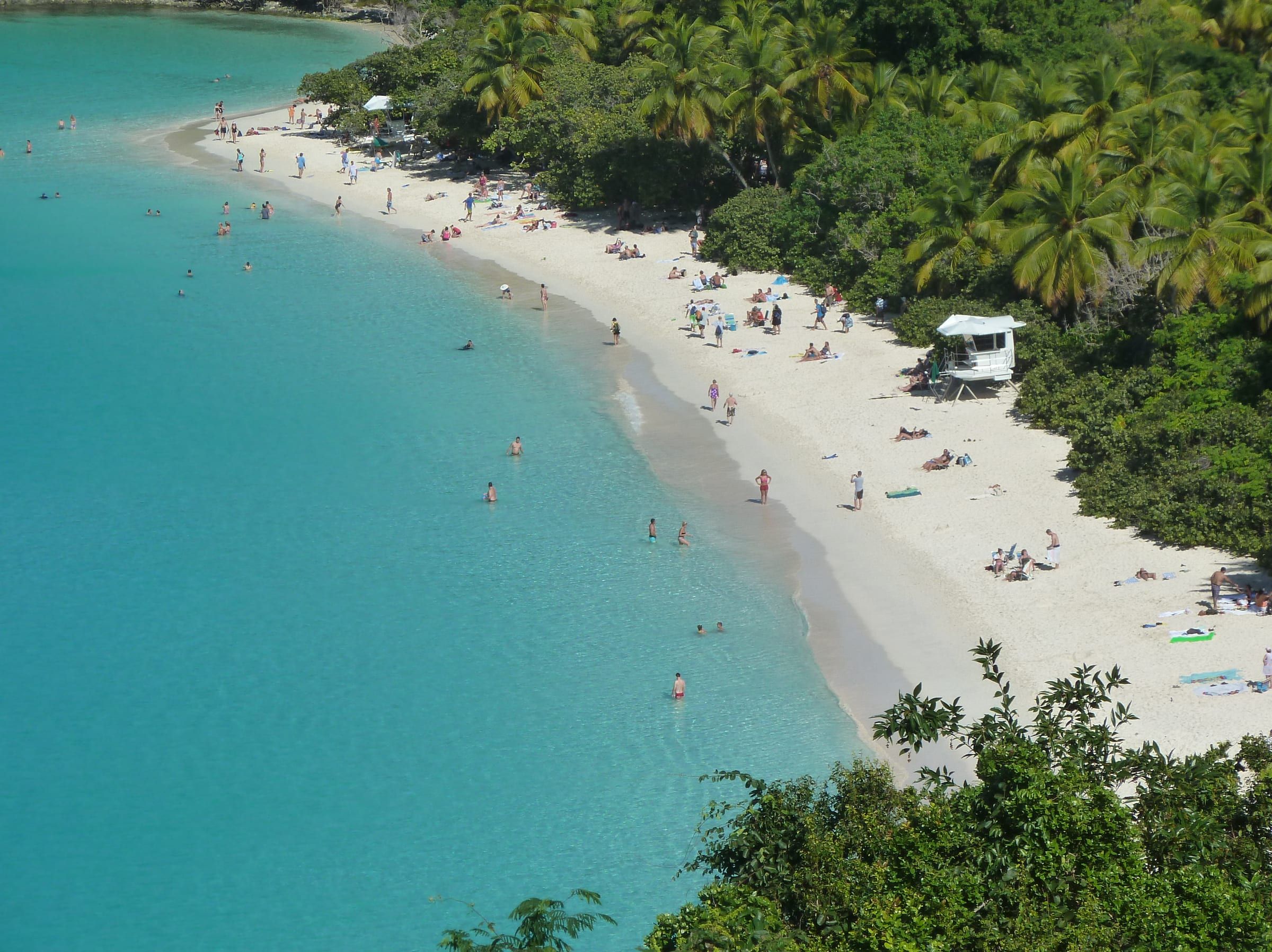
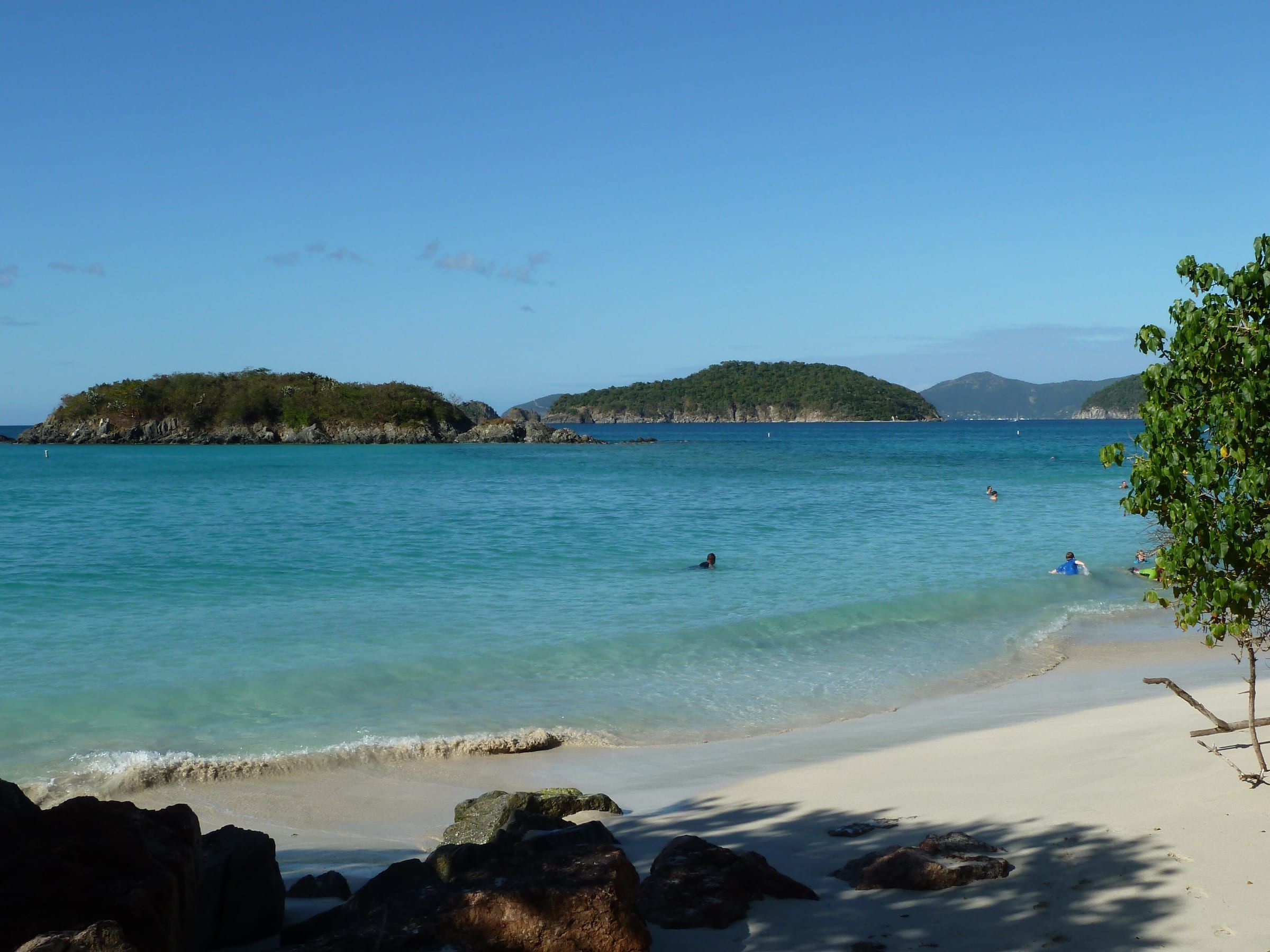
Trunk Bay’s underwater trail. Plaques on the seabed name the reef’s residents. The park’s two pages disagree on its length, “about 300 feet” along the west side of Trunk Cay on one and “about 400 feet” on the other, so plan on a few hundred feet and 30 to 60 minutes. The reef continues past the trail, but the farther out you go, the rougher it gets. Older reviews call the trail worn; no 2026 condition report exists.
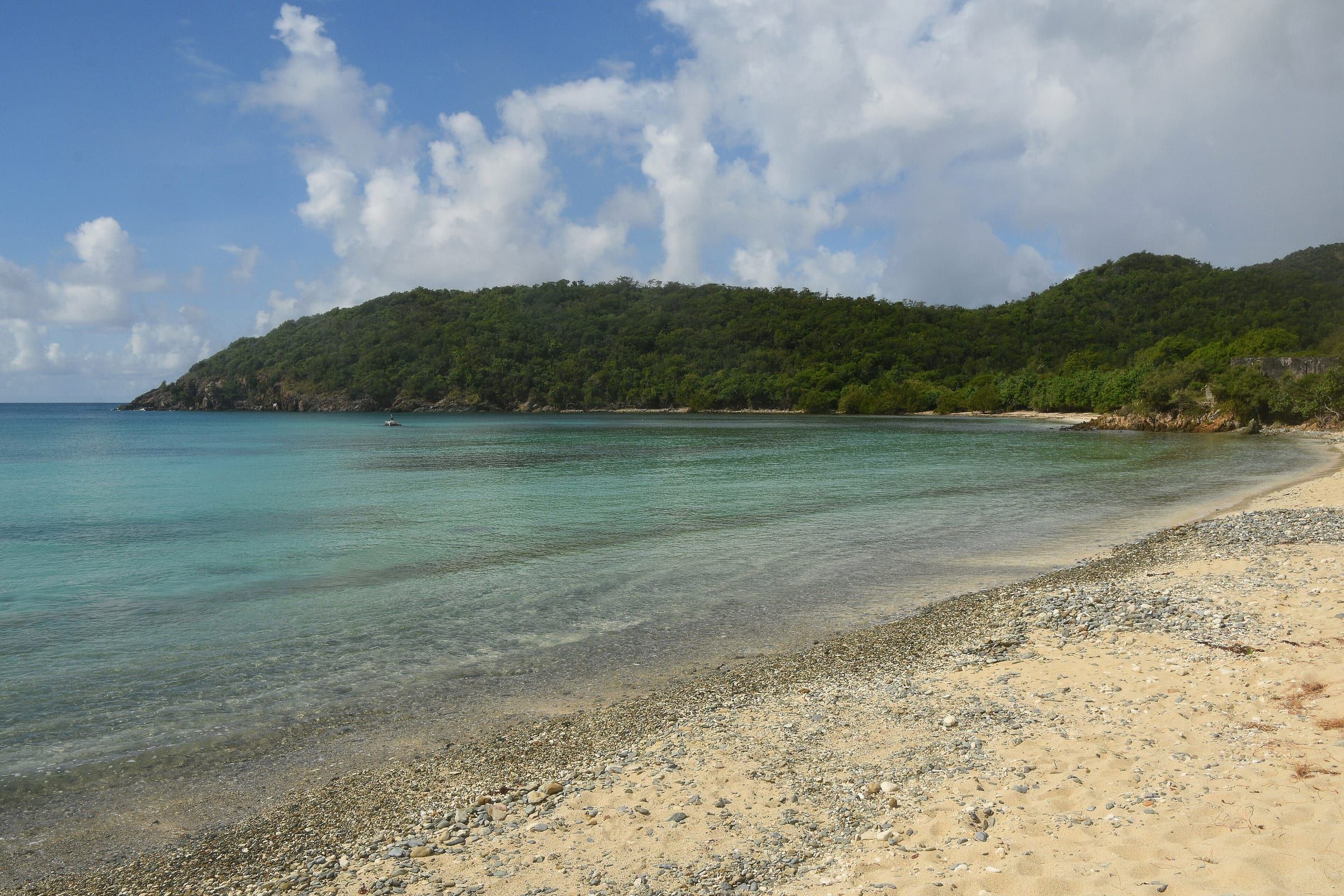
Maho and Francis. Maho’s turtles get their own section. Next door, the park calls Francis Bay “ideal for beginners”, with calm water from the west end of the beach to Little Maho. Both cloud up in a north swell, but the park says they are less affected by winter swells than the rest of the North Shore.
Hawksnest. One of the largest stands of elkhorn coral on the island fans out from the beach in three “fingers”. The park asks: “Please, do not snorkel directly over the reef.” Swim around its edges.
South Shore and East End. At Lameshur, both bays are good “especially at the tip of Yawzi point”, but the road is rough: the park recommends four-wheel drive and warns that many rental contracts ban it. Haulover’s two pebble bays sit on either side of the East End’s narrow neck, so one is usually calm. Hansen Bay, a privately run beach on the East End, is a long snorkel toward Pelican Rock’s boulders.
Tip
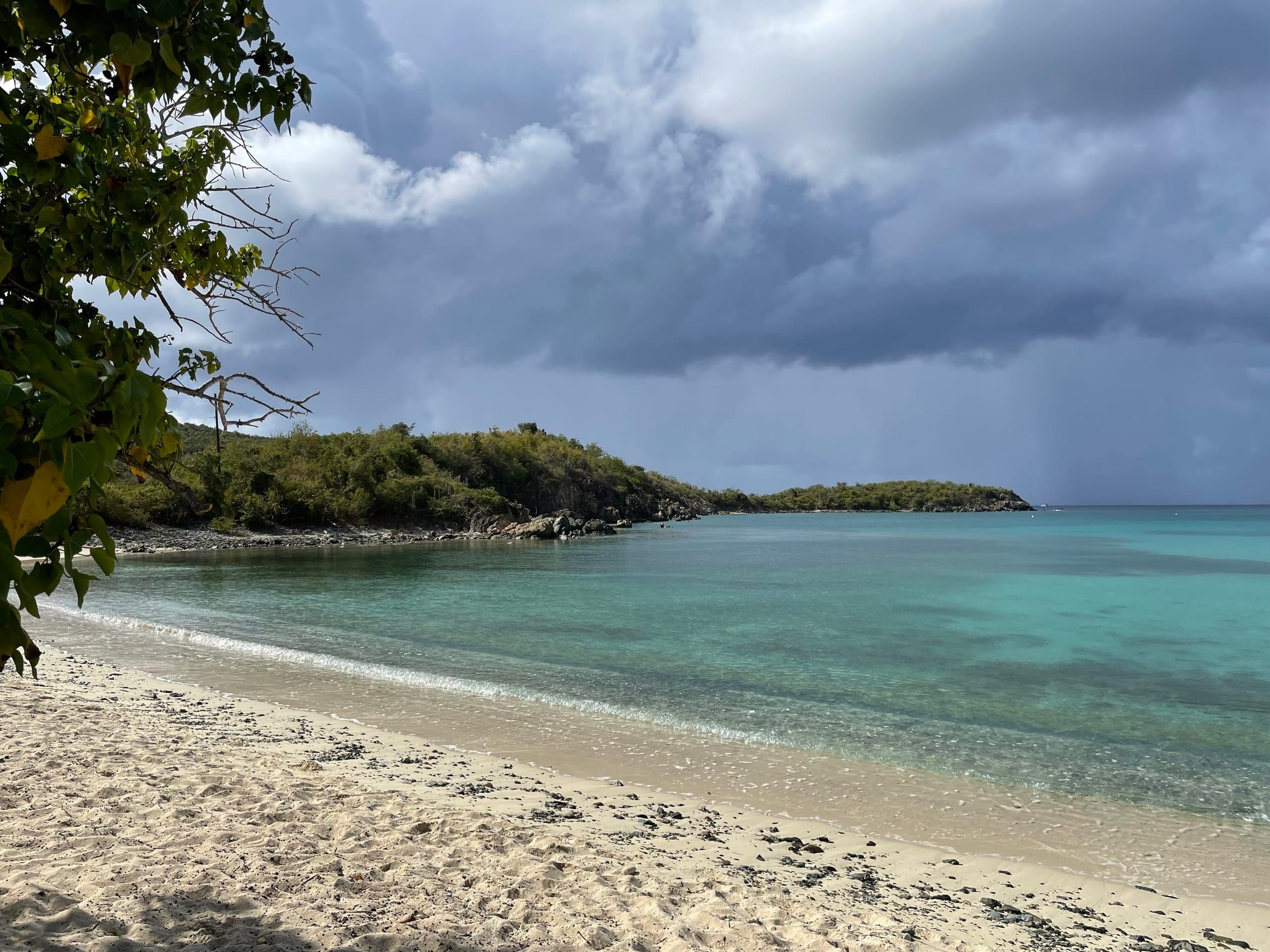
Check the swell direction, not just the wind. A north swell can roll in on a calm, sunny morning and turn Maho and Trunk cloudy. On those days locals head south, to Salt Pond or Hansen Bay, as News of St. John put it when the “Christmas winds” arrived early.
Live conditions are on /now/sea (sea conditions).
Sea turtles, rays and octopus
Turtles and rays feed on seagrass, so look over the grass beds in calm, shallow bays, not over the showiest coral.
| Animal | Where | What the park says |
|---|---|---|
| Green sea turtle | Maho Bay | “the place to go for sea turtles”, seagrass in the middle of the bay |
| Sea turtles | Francis Bay | Calm water, juvenile fish and turtles |
| Sea turtles | Leinster Bay, Waterlemon | Turtles near the reef at the first entry point; seagrass to the cay |
| Turtles, southern stingray | Salt Pond Bay | In the seagrass beds below the mooring field |
| Turtles, rays | Little Lameshur Bay | Seagrass mid-bay (local guide, older) |
| Octopus | Maho Bay, rocks to the NE | “If you are lucky”, in coral crevices |
Maho Bay is the classic: the park says green turtles are “seen more frequently in the early morning or late afternoon”. Float slowly over the middle of the bay and watch for one surfacing to breathe. Salt Pond is the best bet for rays: “Green sea turtles and southern stingrays inhabit the seagrass beds below the mooring field.” Keep an eye out for dinghies there.
Set your expectations. Sightings are common, but some visitors leave Maho without seeing one turtle. Nobody publishes a turtle or ray season for St. John, so we won’t promise one. Most sharks you might see are nurse sharks resting on the bottom; leave them alone like everything else.
Want a guide? VI Ecotours runs a North Shore sea-turtle kayak and snorkel from $119 (3 hours), a Maho Bay turtle snorkel and a Coral Bay kayak-and-tacos trip from $89; prices change, so check the operator’s page.
Snorkeling for beginners, and how hard Waterlemon is
Start where you can stand on sand and the water stays calm:
- Francis Bay: calm water and juvenile fish along the shore toward Little Maho.
- Maho Bay: shallow seagrass, restrooms, and turtles if you’re patient.
- Trunk Bay trail: plaques to follow and lifejackets to rent, but the park says swimmers “should be confident of their swimming ability”, and the water is deeper past the cay.
- Cinnamon Cay: a short swim from the beach, and “the shallow sandy areas on the south side of the cay provide safe resting spots”.
How hard is Waterlemon Cay?
- The walk. About 10 minutes from the Annaberg lot to the first entry point, and 10 more to the main beach, on a flat old road.
- The entry. Rocks and long-spine sea urchins. Wear water shoes or booties, and step only on sand.
- The swim. From the main beach, swim out over the seagrass or along the east shore to the cay. It’s roughly a third of a mile each way (our estimate from map points, not an official distance). Allow 15 to 30 minutes each way at an easy pace, plus time around the cay.
- The current. “A strong current runs on the Tortola (north) side of the cay”, so stay on the south side.
- The easy version. Snorkel the shallow coral heads at the first entry point and skip the swim to the cay.
Caution
No St. John beach has a lifeguard. Snorkel with a buddy, wear a snorkel vest if you’re not a strong swimmer, and know your heart health: drowning and cardiac events while snorkeling cause most visitor deaths in the park. Salt Pond Bay had a drowning in June 2026. Friends of the park run a free Learn To Swim class for all ages on Saturday mornings at Cinnamon Bay.
Boat-only spots
Some of the best reefs are off small cays you can only reach by boat or, for strong paddlers, by kayak. Day charters from Cruz Bay and Coral Bay stop at them (see boat trips).
- Henley Cay, off Caneel Bay: a shallow reef in 3–15 feet with sea fans. Kayaking there means crossing Durloe Channel, where St John Beach Guide warns of a very strong current.
- Whistling Cay, off Francis and Maho: snorkel around it from a kayak or boat; the cay itself is closed to landing.
- Lovango Cay: a private island whose beach club sells a day pass with the boat ride, a lounger and snorkel gear for the south-side reef.
- Congo Cay and Carval Rock, toward the British Virgin Islands: bigger fish and rays in open water with strong current; charters and dive boats go there on calm days. Their current park status is unconfirmed.
Gear: bring or rent
Rent only at Trunk Bay, Cinnamon Bay (a snorkel set is $10 a day) and Maho Crossroads, across the road from Maho. Water-sports shops in Cruz Bay rent by the day or week. Everywhere else, bring your own; see rentals by beach.
- Mask. Buy one that fits and test it at home. A leaking mask ruins a Waterlemon swim.
- Fins and water shoes. Short fins with open heels and booties handle the rocky entries.
- A snorkel vest. Inflatable vests let kids and tired adults rest without standing on coral.
- Rash guard. It saves on sunscreen and protects from summer’s stinging jellyfish.
- Reef-safe sunscreen. The Virgin Islands ban sunscreens with oxybenzone, octinoxate and octocrylene; see the packing list.
Tip
Snorkel in the morning. The water is calmer, the light is better for seeing color, the turtles are feeding, and the parking lots at Trunk, Maho and Hawksnest still have space.
Reef etiquette and park rules
The reefs around St. John are fragile and under stress. A coral disease, stony coral tissue loss disease, was “First observed in 2019 in St. Thomas” and has since spread through almost all of St. John’s reefs. Warm water adds to it: NOAA’s satellite gauge for the Virgin Islands showed bleaching heat stress at Alert Level 4 on November 19, 2026, so you may see pale or bleached coral this winter. That gauge covers the whole region, not a single bay.
Help the reef where you can:
- Stand only on sand. The park asks snorkelers to rest on sand, never on coral; damaging coral is illegal in the park.
- Don’t touch or feed anything. Feeding, touching or chasing wildlife is banned in the water as on land. Give turtles room to surface.
- Fin carefully. Keep your fins up over shallow reef; one kick can break coral that took decades to grow.
- Take nothing. Shells, coral and rocks stay where they are.
- Mind the boats. Snorkel away from mooring fields and boat lanes, and use a bright cap or float in Salt Pond, Francis and Cinnamon.
For water quality and seaweed, see sargassum and water quality. None of the spots above is a territorial water-quality station.