At a glance
- Sargassum season
- Spring to late summer, worst in June and July
- Virgin Islands Department of Planning and Natural Resources · verified
- Bacteria testing
- Five St. John stations, none in the national park
- Virgin Islands Department of Planning and Natural Resources · verified
- Latest St. John result
- Not sampled in the weeks of Nov 6, 13 and 20, 2026 — unknown
- Virgin Islands Department of Planning and Natural Resources · verified
Live conditions are on /now/sargassum (sargassum).
Live conditions are on /now/sargassum (beach water quality).
Short answer
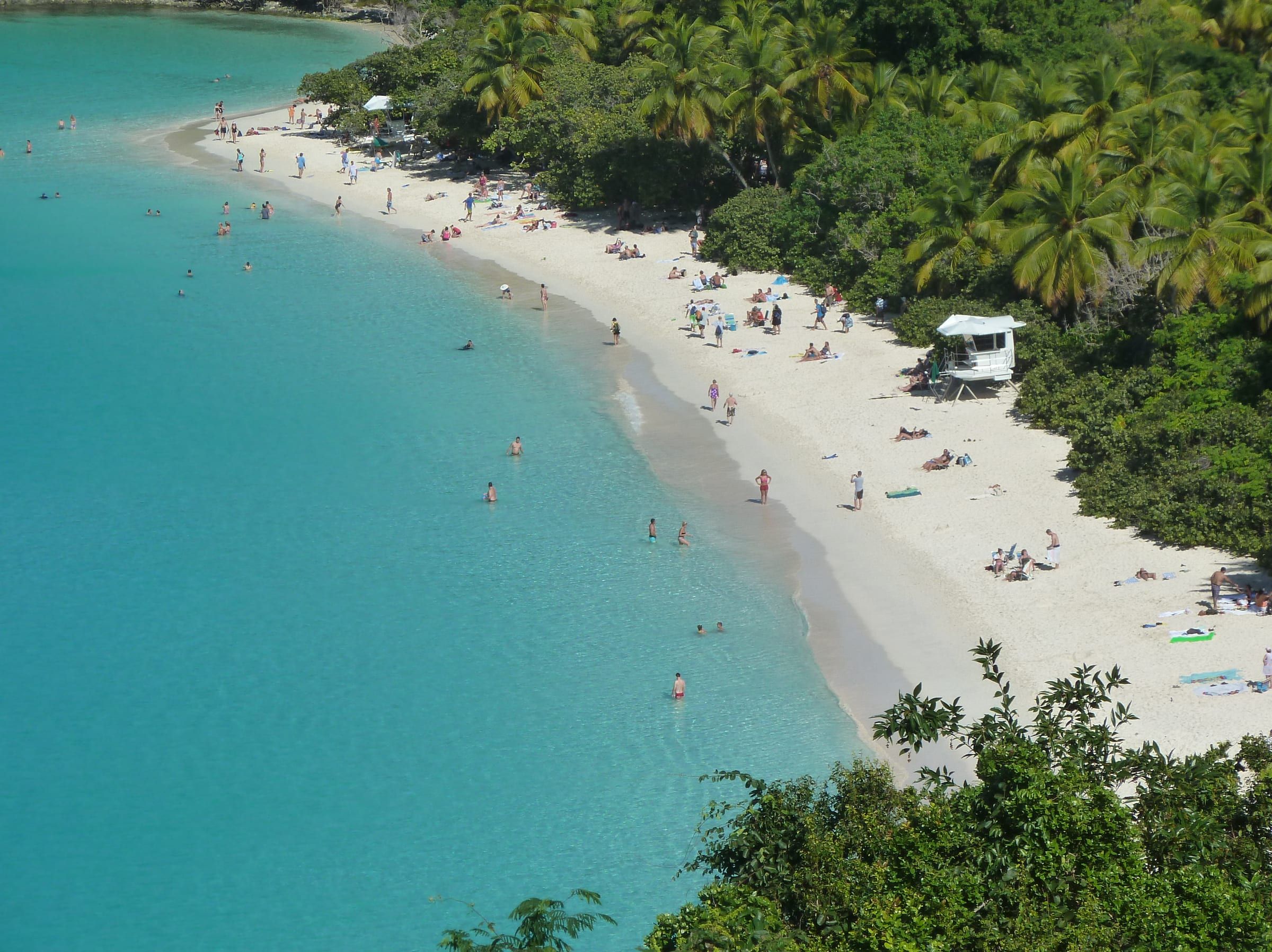
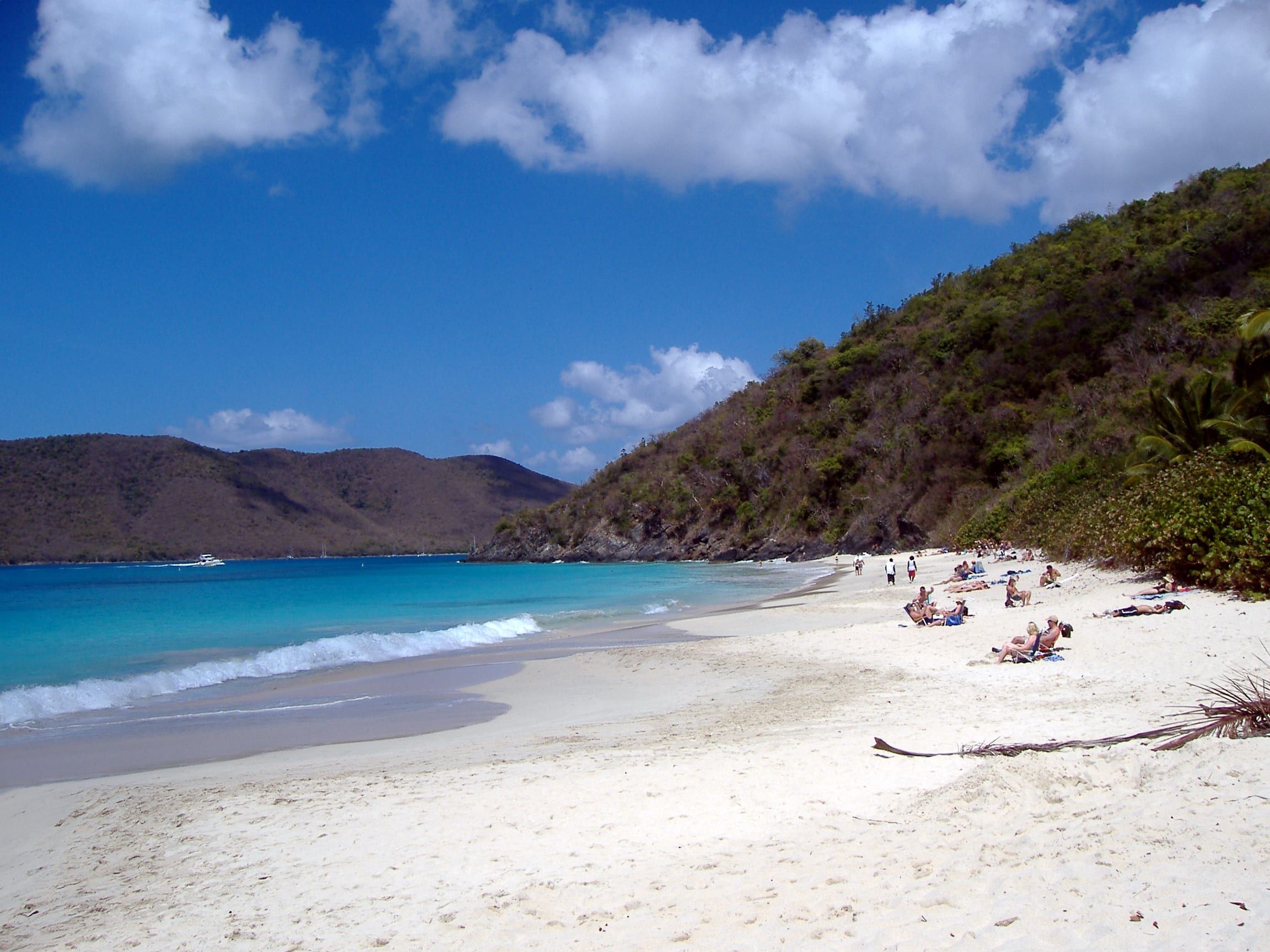
Sargassum is a floating brown seaweed that drifts in from the Atlantic, mostly from spring to late summer, and is worst in June and July. On St. John it piles up on the east-facing bays of the East End and in Coral Bay, while the North Shore beaches (Trunk, Cinnamon, Maho, Honeymoon) usually stay clear. 2025 and 2026 were the two biggest sargassum years on record, and amounts were falling through the fall.
For bacteria, the territory tests just five St. John sites, all outside the national park, and it skipped St. John three weeks running in November 2026. Park beaches are simply not tested. After heavy rain, stay out of water near drains, guts and harbors.
Live conditions are on /now/sargassum (sargassum).
Sargassum: what it is and when it comes
Sargassum floats in mats on the open ocean and is carried west by the trade winds. Since 2011 it has reached the Caribbean in large amounts almost every summer. In January 2026 the territory’s Fish and Wildlife division warned of a big year, and by May its update spoke of “a record high year for accumulation at the territory’s beaches”. The Associated Press reported “Some 27 million metric tons” across the Atlantic, Caribbean and Gulf in July; the University of South Florida, which tracks it by satellite, ranked 2026 second only to 2025. Either way, it was one of the two biggest years on record.
The season then turned. USF’s late-August outlook expected amounts to “continue to decrease in the coming months until possibly November”, with Caribbean beaching less severe than in summer.
Is it harmful? Floating sargassum isn’t dangerous to swim near, though tiny stinging creatures can live in it. The trouble starts when it rots on the beach. The territory’s environment department warns that decaying mats release hydrogen sulfide, a “rotten egg” odor that irritates the eyes, nose, throat and lungs, especially for people with asthma. Its advice: “Avoiding beaches with large amounts of decaying sargassum is the best method of prevention.”
Tip
Planning a trip for June or July? Base your beach days on the North Shore, and treat the East End and Coral Bay as a bonus if the week’s reports look clear.
Which beaches get it
Wind and current push sargassum onto shores that face east, into the trade winds. A Coral Bay charter company’s mid-season report sums up the pattern: the biggest deposits are found on easterly-facing bays and beaches. There is no official beach-by-beach report for St. John; this is the latest one we found, and it dates from June 15, 2026.
| Beach or area | Faces | Latest report (Jun 15, 2026) | What to expect in season |
|---|---|---|---|
| Trunk, Cinnamon, Maho, Honeymoon | North | Unaffected | Low; still check |
| Friis Bay, Haulover, John’s Folly | East | High | High |
| Coral Bay harbor | East | Moderate | High |
| Drunk Bay | Southeast | No report | High; it’s the windward side |
| Hansen Bay, Long Bay | East | No report | Unknown, likely higher |
| Salt Pond, Lameshur and other South Shore bays | South | No report | Unknown |
The seasons pull in opposite directions. In winter, north swells push snorkelers to the south and east sides; in summer, sargassum pushes them back to the North Shore. See choosing a beach by conditions.
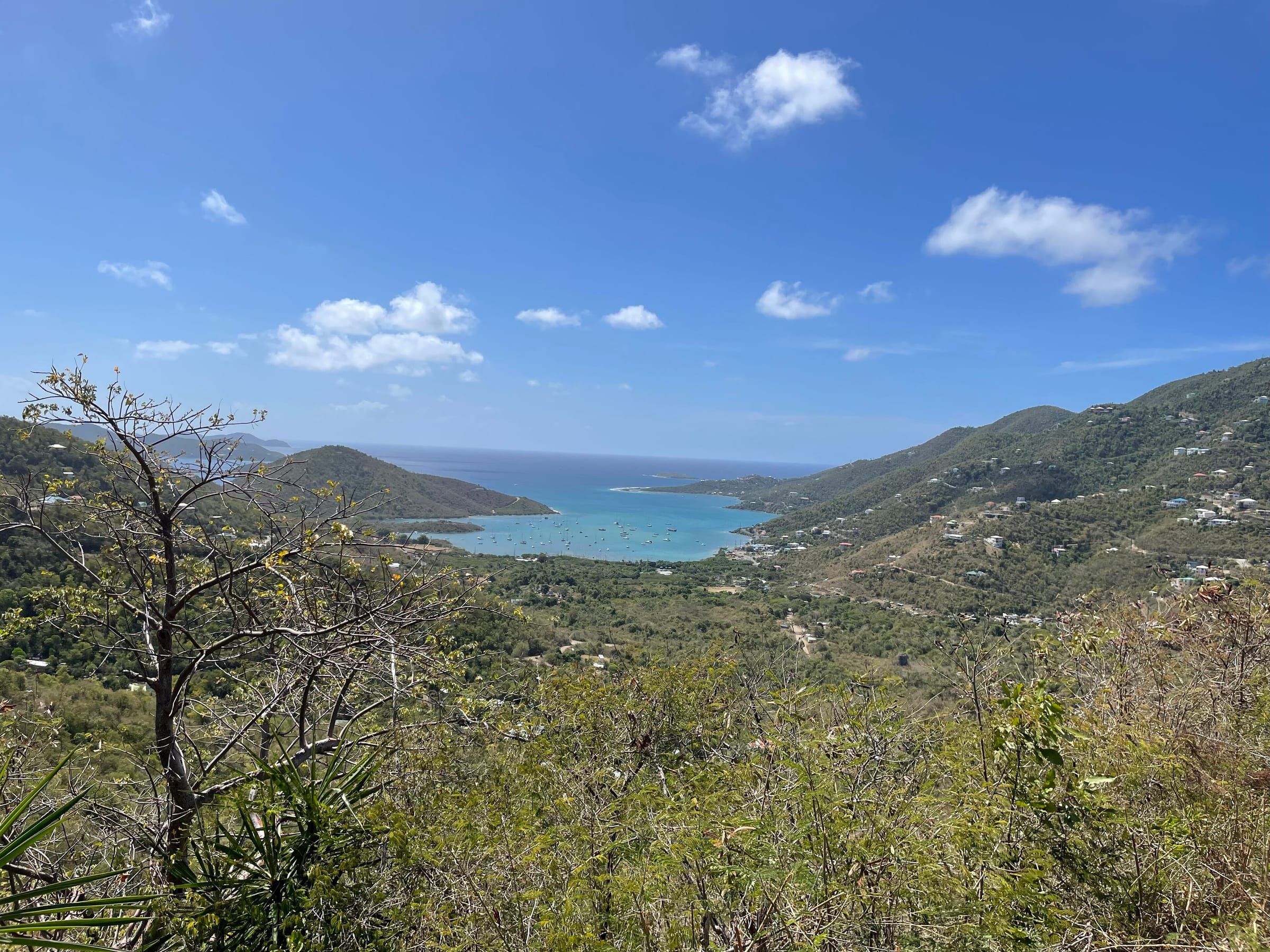
Water quality and bacteria tests
The Virgin Islands Department of Planning and Natural Resources (DPNR) runs a weekly beach program that tests “for Enterococci Bacteria and Turbidity” and posts an advisory most Fridays. Each one sorts beaches into three lists: met standards, exceeded the bacteria limit, and not sampled. DPNR’s data sheet sets the line: “If the sample contains more than 70 colonies per 100 mL, the beach is unsafe for swimming.”
On St. John it covers only five stations, all near town or private shores:
| Station | Where |
|---|---|
| Cruz Bay | The town beach next to the ferry dock |
| Frank Bay | Just south of Cruz Bay |
| Great Cruz Bay | The Westin’s bay |
| Johnson Bay | Coral Bay |
| Oppenheimer | Gibney and Oppenheimer beach, Hawksnest Bay |
Three more, Klein Bay, Hart Bay and Chocolate Hole, are marked as not monitored this season.
St. John is often skipped. In the advisories of November 6, 13 and 20, 2026, DPNR collected no samples on St. John. The latest says “All beaches on St. John” were not sampled, so their water quality “is unknown”. Unknown doesn’t mean dirty, and it doesn’t mean clean.
The park beaches aren’t on the list. Trunk, Cinnamon, Maho, Francis, Salt Pond and the other national-park beaches have no public bacteria results. The park said in 2020 that it tested Maho, Hawksnest and Trunk monthly and found results “well-within the safe limits for swimming”, but it has published no results since. The honest label is “not monitored”. These beaches are far from town drains, which helps, but nobody is checking.
Official notice — Virgin Islands Department of Planning and Natural Resources
Waters impacted by sewage, stormwater runoff (i.e., guts, puddles, and drainage basins), large amounts of sargassum, or any area that appears discolored or has foul odors should be avoided.
In practice: after a heavy rain, give it a day or two before swimming near Cruz Bay, Coral Bay or any gut (a dry streambed that runs after rain), and swim away from the ferry harbor and boat moorings.
Live conditions are on /now/sargassum (beach water quality).
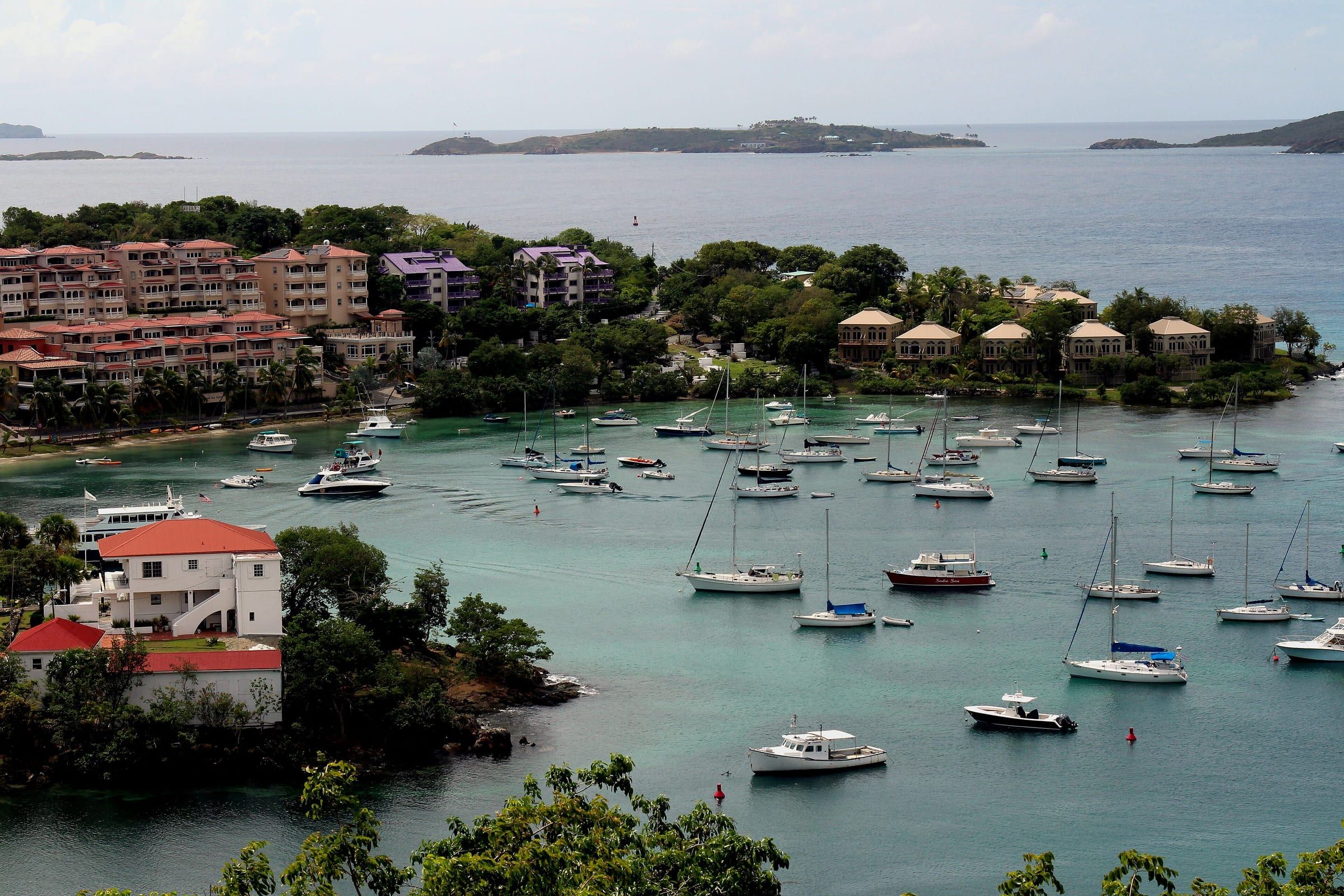
How to check before you go
Our sargassum and water page collects these, with each source’s date, and never shows “no sargassum” or “clean” when a feed fails:
- DPNR beach advisory (weekly, usually Friday): the only official bacteria results. Check the date and whether St. John was sampled at all.
- USF Sargassum Watch outlook (monthly, at the end of the month): the regional trend. USF says its bulletins are a general outlook, not a forecast for “a specific location or beach”. The latest is October 2026.
- NOAA Sargassum Inundation Risk (updated several times a week): satellite maps for the Lesser and Greater Antilles. The latest is dated November 19, 2026.
- DPNR’s sargassum updates: monthly in early 2026, but the latest we found is from May 19, 2026.
On the island, your nose is the best test: if a beach smells of rotten eggs, go to another one. Rangers and your rental host usually know which bays are clear that week.